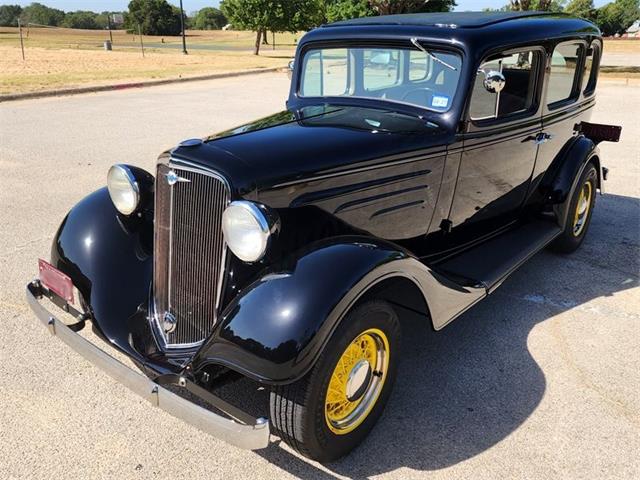
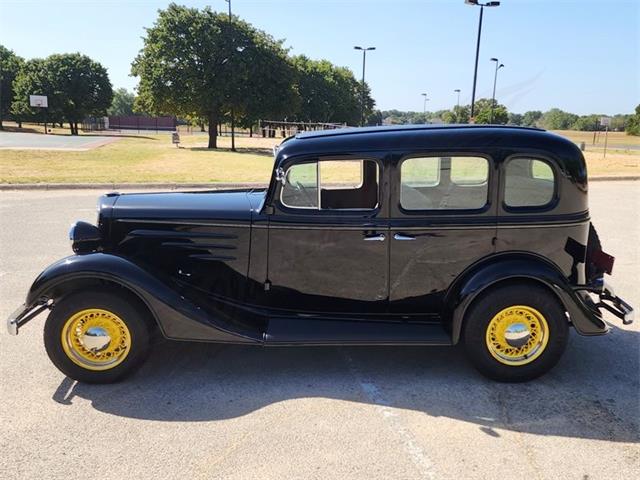
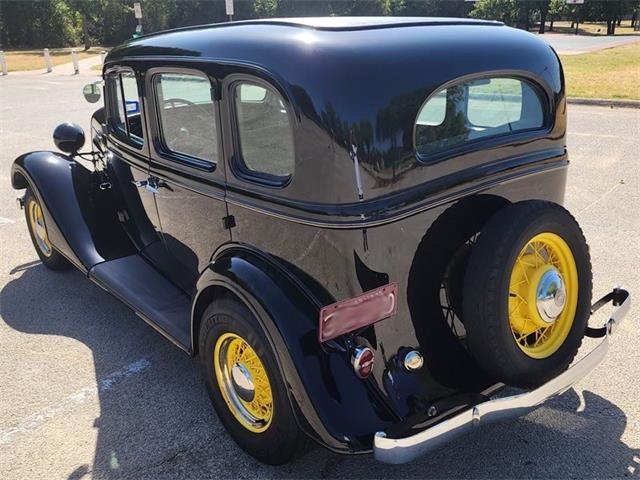
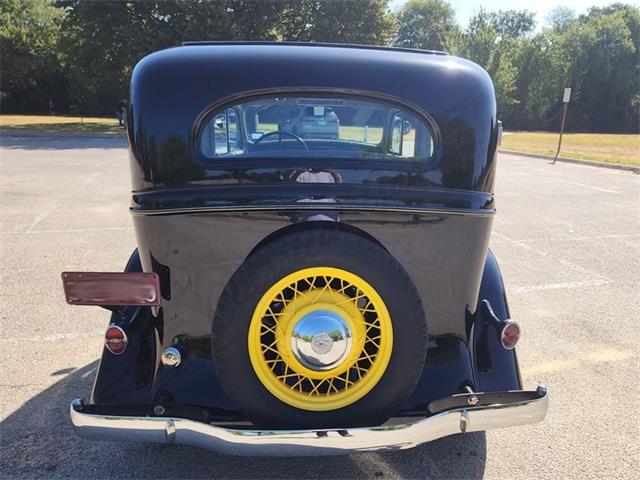
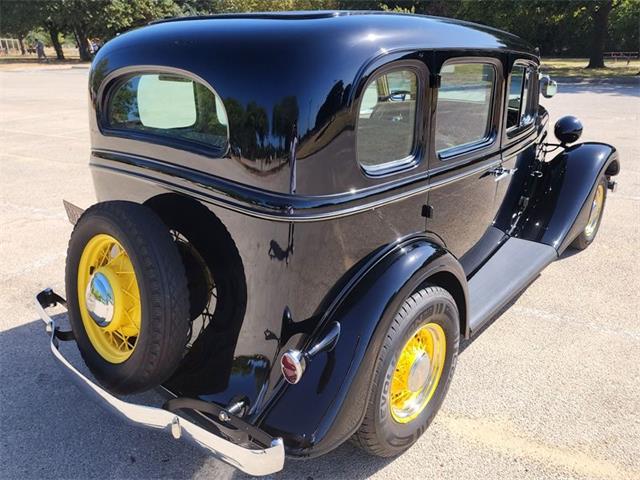
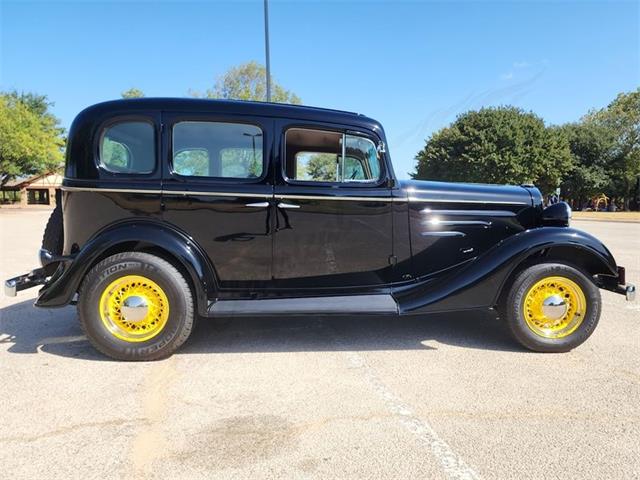
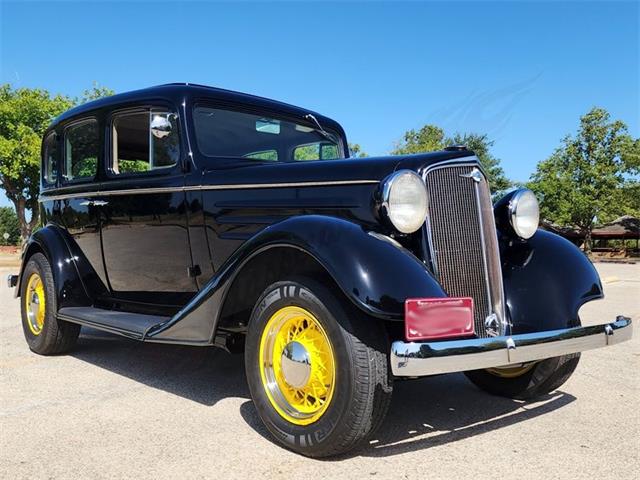
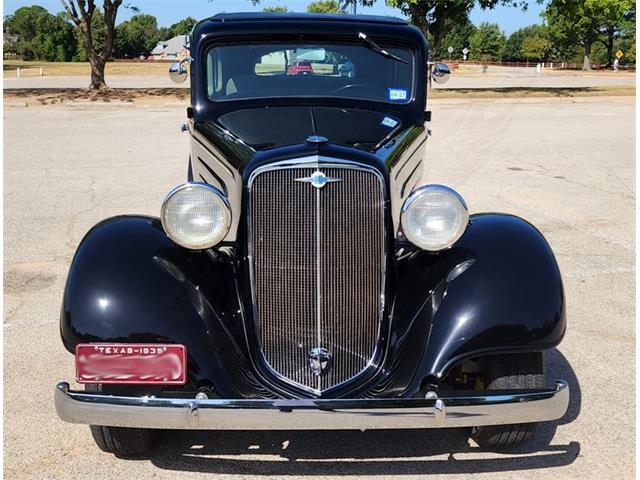
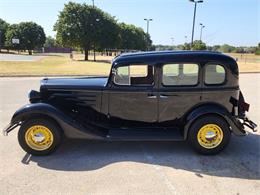
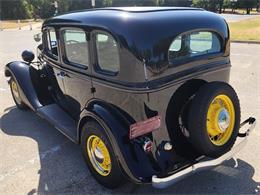
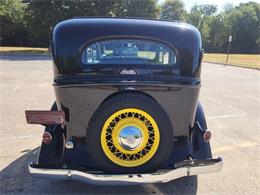
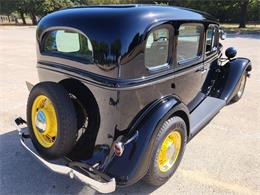
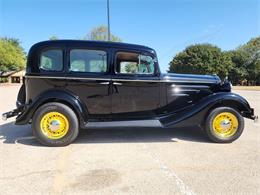
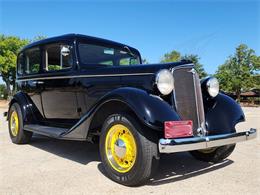
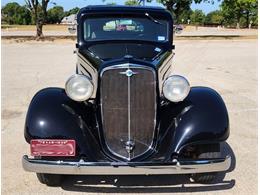
The Model EC was Chevrolet's price leader in 1935 and featured the
shorter 107 inch wheelbase. They had the more trim sporty look and
were offered with the rear hinged back suicide door which was a
trend overseen by the Harley Earl's Art and Color Section, the 1st
premier in house styling department. This 1935 Chevrolet is a
beautiful example and a vehicle you really need to look at closely.
Not all cars are created equal and the level of detail in this
build is something you rarely see. This is not a typical "hot rod".
There are no gimmicks, fads, billet, or other trendy stuff on this
car. Due to the car's family history, it was decided early on to
restore the car to the appearance of having just been driven off
the showroom floor in 1935, but with a few barely noticeable
improvements.
This car was purchased in 1935 in Burlington, Kansas by the current
owner's wife's great uncle, who drove it for some 30 years in and
around that area. Upon his death, it was placed in a barn on the
family farm and sat there until the summer of 1995. It was at that
time the current owner's trailered it home to decide what future
the car was to have. That is when the restoration journey began and
we can't stress enough the quality of work done on this car. The
car is stunning in person and achieving the goal of the fresh
showroom look was complete without question. It is all extremely
well documented and books include a complete photo record of the
build process as well as a detailed engine build sheet, including
engine dyno results, complete book of all components used in the
construction, and an extensive illustrated wiring reference book
are available.
BODY - This was the last year that Chevrolet used wood for the
internal framing. After careful inspection, all the wood was found
to be in sound condition and required only cleaning and a
preservative coating application. Four new top bows were fabricated
and added to the roof insert area. All interior metal was cleaned
and Rustoleum black applied to all surfaces. No rust was found
anywhere on body surfaces. The body was raised from the frame and
all new body mounts installed. The underside of the body was fully
coated using Por15 black polyurethane. The exterior was completely
media blasted and what bodywork was needed was done via plastic
filler; epoxy fill primed, and finish coated in the original black
Chevrolet color using base coat-clear coat. The paint was applied
by David Gardner of Gardner Paint & Body in Colleyville. The body
retains the few factory nameplates and emblems, all of which have
been detailed and polished. The rear fenders are original and after
extensive bodywork, were reused. The front fenders are fiberglass
and have been massaged to fit the existing frame and grill
curvatures. The running boards are steel and have been modified to
provide additional support and are covered with rubber mats to
match the originals. A complete Juliano's top insert kit was used
to replace the original factory insert.
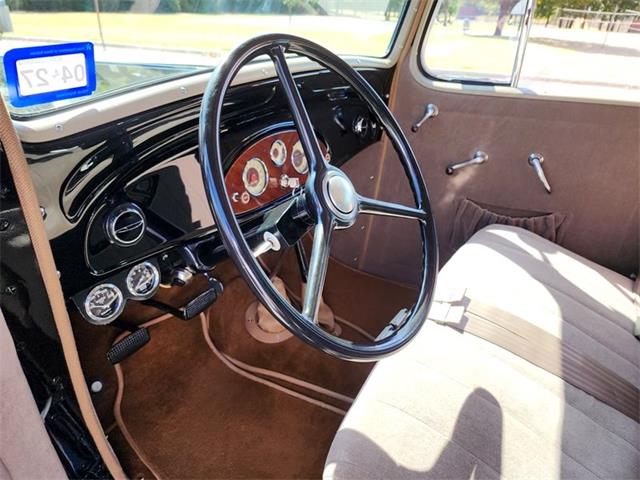
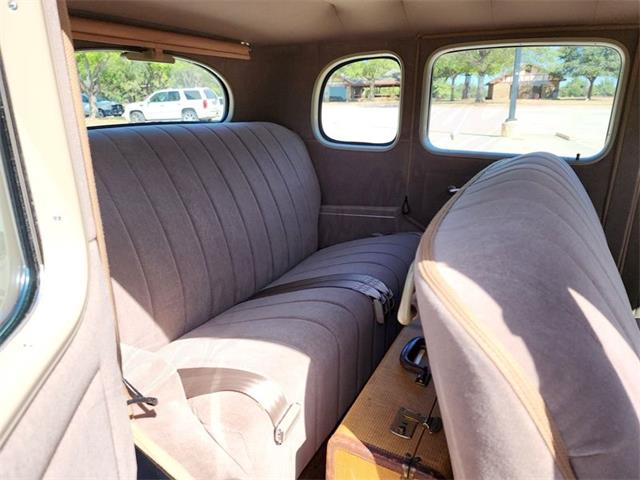
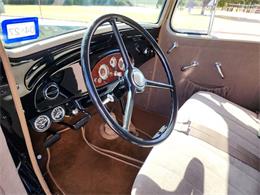
INTERIOR - The entire interior was disassembled and everything
rebuilt including window lift mechanisms, door locks, hinges, etc.
Multiple layers of insulation and sound deadener were placed inside
every body cavity, firewall, top insert area, and floorboards. All
windows were replaced with tinted safety glass using all new rubber
weather stripping and all window channels are new. The seat frames
were stripped, cleaned, repainted and wood frames stained. Seat
springs were rebuilt and painted, with foam rubber added for
additional seat comfort. The original rear seat arm rest / wheel
cover areas were unusable so new ones were fabricated from
fiberglass after building exact duplicates of the originals. The
original instruments were removed from the dash and sent off to be
rebuilt so that they would be compatible with today's engine
requirements. The necessary new instrument faces which were made to
exactly duplicate the original colors and layouts. A custom dash
panel was fabricated to fit the dash insert and was wood grained in
the same original pattern by an elderly man in east Texas who had
actually done that type of work for the car factories in Detroit in
the 1920's and 1930's. The original steering wheel was cleaned,
detailed, and repainted along with the original steering column. A
custom turn signal switch was added to the steering column and
fabricated to resemble switches used during the 1930's. The front
seat has the original seat adjustment lever and is fully
operational. Juliano1/2s seat belts are provided for the front and
rear seats. A Vintage Air heating and air conditioning system was
installed under the dash with hidden controls to further convey the
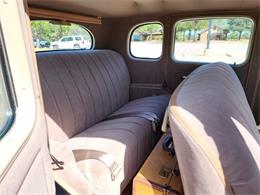
original appearance of the interior. The entire interior was
finished in the original type mohair upholstery in the exact same
pattern as was originally used in the car. The exact patterns and
measurements off the old upholstery were used in the making of the
new interior coverings. This work was done by Mike Millsap of
Sachse Rod Shop. Included in the interior are rebuilt versions of
the original rear window sunshade and the rear assist bar located
on the back of the front seat.
FRAME & RUNNING GEAR - The frame and all miscellaneous components
were sandblasted and are painted with black polyurethane. The
original springs were in good condition and all were checked and
reconditioned as needed, sandblasted, polyurethane coated with
Teflon inserts added between each leaf. New spring eye bushings
were added as was a heim end adjustable traction bar to the rear
suspension. A rear sway bar was installed on the rear end for
better handling on curved roadways. The rear end is a Ford 3:25
ratio 8" with all new components. The front axle is a custom
fabricated 4" drop tube that has disc brakes composed of '39
Chevrolet spindles and kingpins with GM 70/77 Camaro calipers on
Mopar rotors. Shocks on all four corners are Monroe. The brake
system uses a Wildwood manual master cylinder with residual
pressure valves and an adjustable proportioning valve.
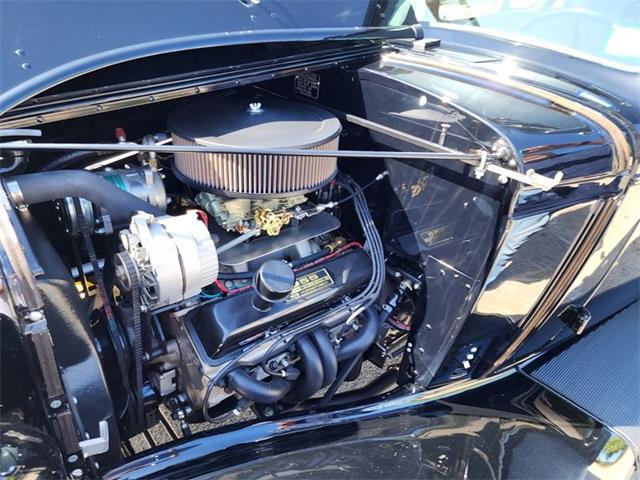
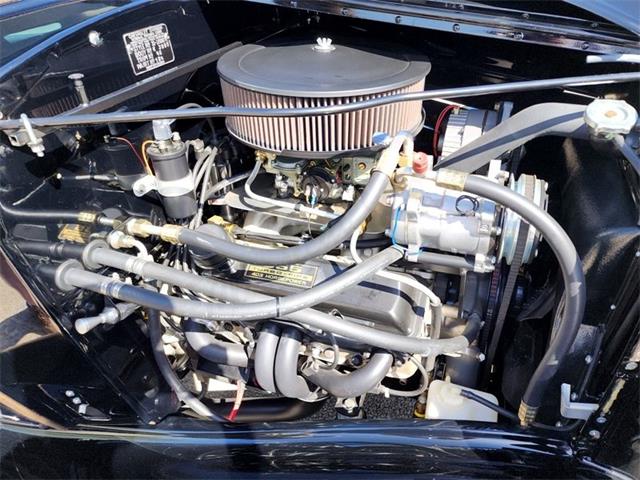
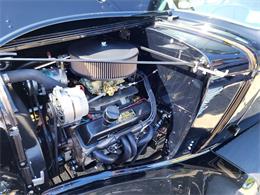
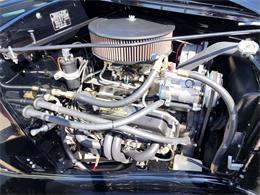
ENGINE - a mild 355 Cu. In. Chevrolet small block was built with
driving in mind (torque, not horsepower), so every part was
designed to compliment the other to insure reliability, cool
running, and usable power. Basics include a balanced and
"blueprinted" short block consisting of 4 bolt mains, forged steel
10/10 crank, powdered metal rods, forged 2-valve relief flat top
pistons with 9.1 CR and Fluidampr harmonic balancer. Other
components include modified Edelbrock RPM aluminum heads, mild
custom grind Comp Cams hydraulic 220 / 224 degree roller cam with
Comp Cams 1.6 roller rockers, Edelbrock Air-Gap with modified
Holley 3310 vacuum secondary carb with secondary metering block, 1"
open spacer, and heat shields under intake and carb. MSD billet 6AL
distributor (centrifugal advance), coated block hugger headers with
crossover into DynoMax mufflers and 2 1/2" exhaust. Numerous other
modifications. Engine dyno'ed at 403 HP @ 5300 rpm and 415 FP
torque @ 4900 rpm. The engine is cooled by a Walker Radiator Works
radiator, fan shroud, and their MaxAir fan.
TRANSMISSION - Modified Chevrolet TH350 with 2400 stall converter.
Transmission has finned aluminum deep pan. Shifter is long handle
Lokar with shifter knob adapter so original style 35 Chevrolet knob
was used. You couldn't come close to replicating it for $49500
ClassicCars.com has been recognized as one of the fastest-growing private companies in the United States, successfully making the Inc. 5000 list in both 2015,
2016, 2017 and 2018. This prestigious accolade represents the continued growth of the company, and ClassicCars.com's dominance as the world's largest online marketplace for
buying and selling classic and collector vehicles.
The Stevie Awards, the world's premier business awards recognized
ClassicCars.com's first-class Customer Support team with a Stevie Bronze Award in 2019, celebrating the team's skills as exemplary customer support specialists.
In 2016 The Journal, brought to you by ClassicCars.com, was celebrated as the SECOND MOST INFLUENTIAL automotive blog in the world by NFC Performance.