"You can't be a true petrolhead until you've owned an Alfa Romeo,"
Clarkson once said. Fair enough, but with all due respect to the
messiah: he really could have added a second line. Something along
the lines of "and you're not truly grown up until you've heard a
VR6 sing." Because that sound, those six cylinders that don't sit
neatly in a row but are crammed together at a fifteen-degree angle
in a block that's really far too wide for the engine bay of a Golf,
is one of the finest noises Wolfsburg has ever produced. Let's
rewind a bit. In the early '90s, Volkswagen had a problem. The Golf
III had grown more mature, heavier and better-behaved than the
sharp Golf II, and in the eyes of many an enthusiast the GTI had
lost some of its shine. The solution didn't come from the usual
direction of more turbo or more revs, but from a completely new
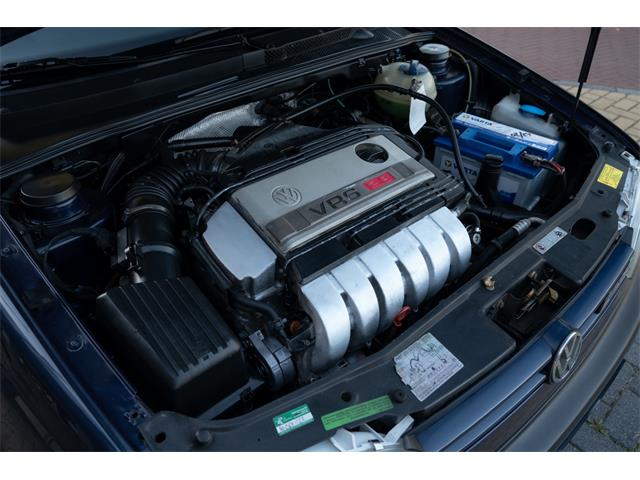
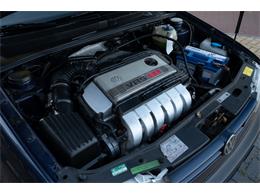
engine: the VR6. Six cylinders in a narrow V, with a single
cylinder head over the whole lot, which made the block so compact
that it simply fitted transversely under the bonnet of a Golf. 2.8
litres, 174 bhp, and a torque curve you could picnic on all
afternoon. No turbo lag, no drama, just a steady wave of shove that
only lets up when you lift off the throttle in surprise. It was the
fastest Golf you could buy back then, and instantly the most
grown-up too. Where the GTI was a yappy little terrier, the VR6 was
a grand tourer in the guise of a compact hatchback. You could do
the shopping in it and then head off, undisturbed, on a road trip
down to the C�te d'Azur without your ears or your back complaining
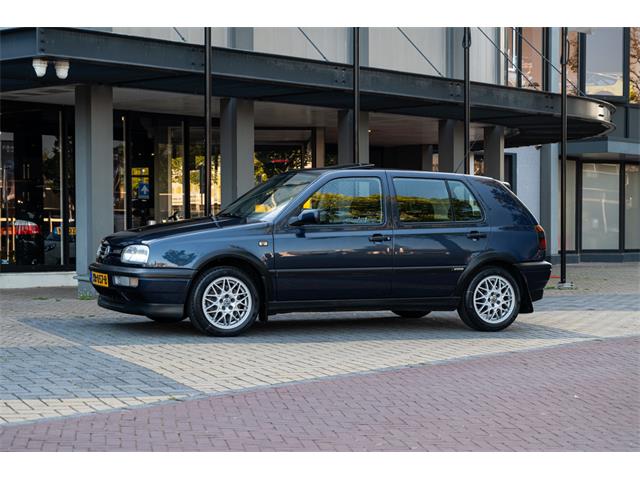
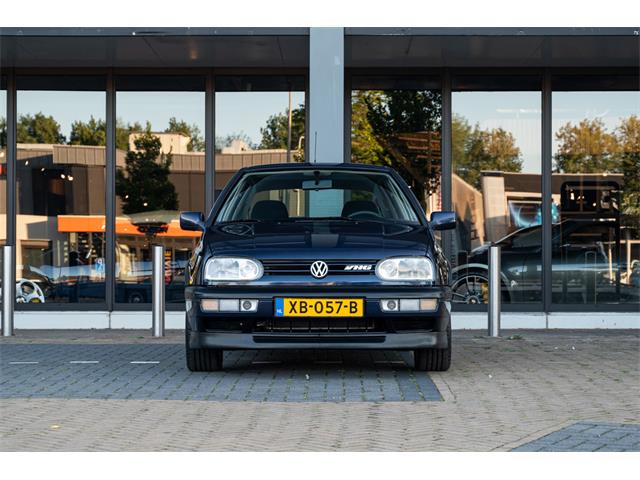
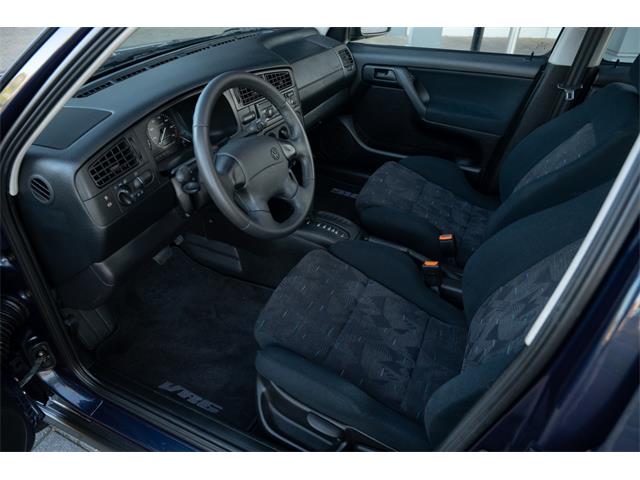
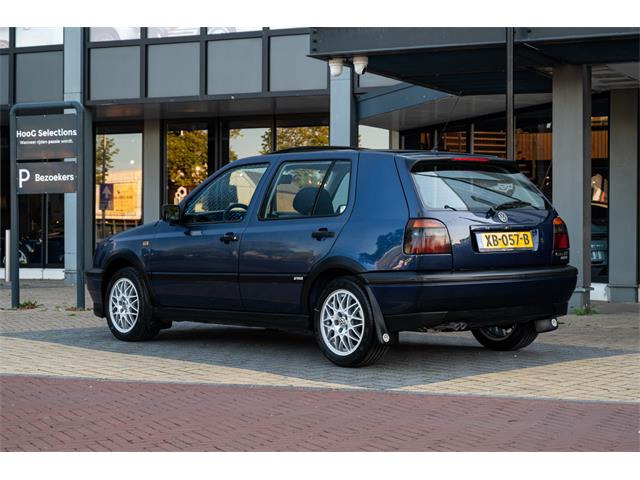
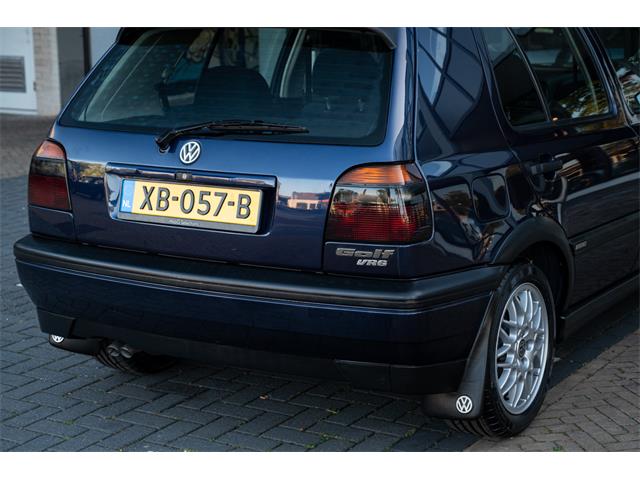
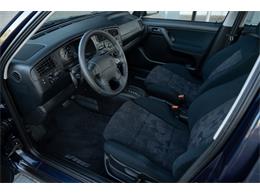
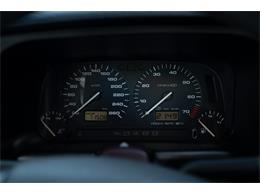
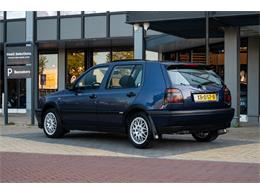
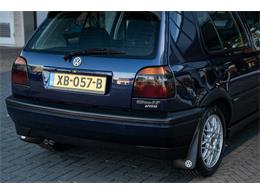
one bit. Right, back to the VR6 in question. This dark blue one
from 1993 has a life story you don't come across very often.
Because it didn't spend its first 25 years in Germany or the
Netherlands, but in Japan. Delivered new in November 1993 to an
official Volkswagen dealer in Odawara, a coastal town not far from
the foot of Mount Fuji. And the Japanese did exactly what they're
world-famous for: cherishing it as if it were a porcelain tea set.
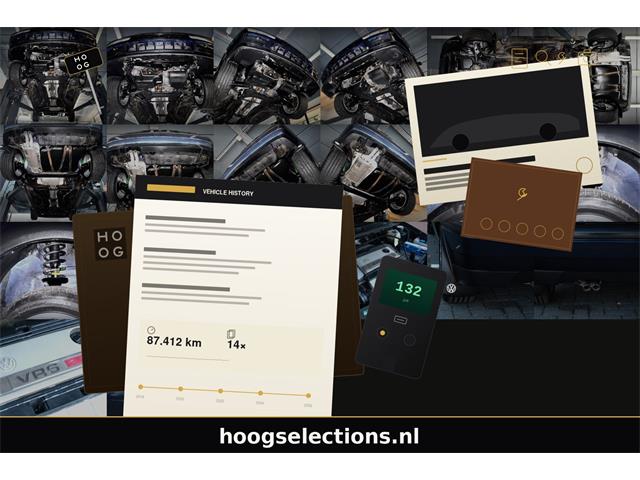
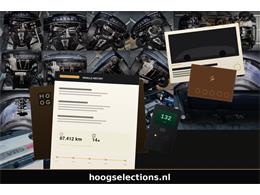
The service history is a small work of art in itself. Recall
actions dutifully carried out at the dealer, biennial inspections
just as they should be, fan motor replaced under campaign, edge
protection fitted to the window wiring, rear-door clip installed.
All neatly stamped and documented, in that characteristic Japanese
booklet where you can't read a single word but where every page
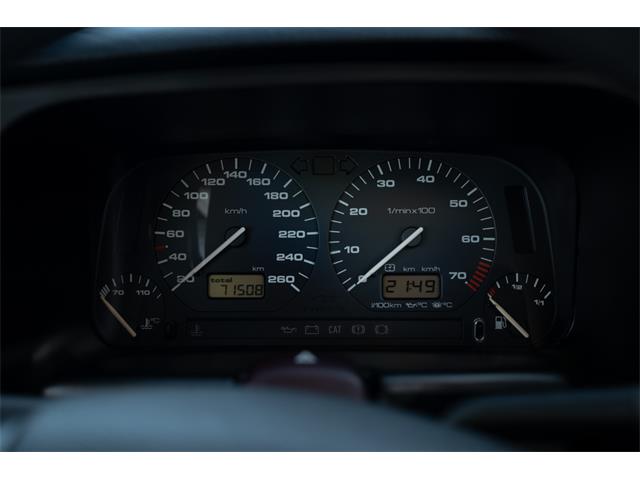
screams that someone here loved their car. In 2018 it came to the
Netherlands, and since then it has mostly stood quietly, which you
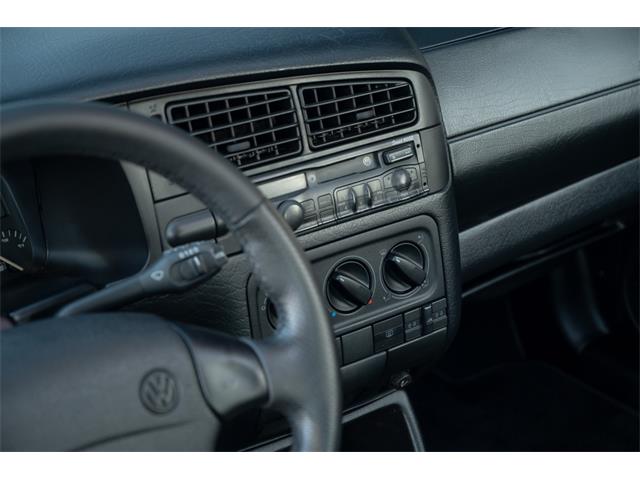
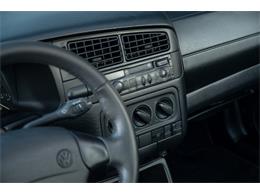
can tell in every respect. Manual gearbox, which with a VR6 is the
only right answer. The five-speeder lets you feel exactly what
those six cylinders are up to, and that's a conversation you don't
want to outsource to an automatic. The Continentals underneath are
practically new, well over 8.5 mm of tread all round, so you won't
need to worry about those for a good while. Fair's fair: it's a
32-year-old car, and that means something asks for attention now
and then. The ABS light, for instance, deserves a look, that came
up as an advisory point from the last inspection. But that's
precisely the sort of job an enthusiast happily takes on himself,
because then you're actually doing something with your car instead
of just sitting in it. And that's exactly what makes a VR6 so
special. It's not a museum piece to be shut away in a
climate-controlled cabinet. It's a car you simply drive, every day
if you dare, and one that keeps reminding you, with that
characteristic humming growl, why you fell in love with driving in
the first place. A sleeper avant la lettre, in the most
inconspicuous blue you can imagine, with an engine nobody in a car
park expects anything of until you fire it up. This Golf has seen
half the world and is still calmer than most of us. Time for a
fourth owner to give it the sound it was built for. **Special
features** - Legendary 2.8 VR6, 174 bhp, that inimitable
six-in-a-narrow-V sound - Manual five-speed gearbox, exactly as
ClassicCars.com has been recognized as one of the fastest-growing private companies in the United States, successfully making the Inc. 5000 list in both 2015,
2016, 2017 and 2018. This prestigious accolade represents the continued growth of the company, and ClassicCars.com's dominance as the world's largest online marketplace for
buying and selling classic and collector vehicles.
The Stevie Awards, the world's premier business awards recognized
ClassicCars.com's first-class Customer Support team with a Stevie Bronze Award in 2019, celebrating the team's skills as exemplary customer support specialists.
In 2016 The Journal, brought to you by ClassicCars.com, was celebrated as the SECOND MOST INFLUENTIAL automotive blog in the world by NFC Performance.