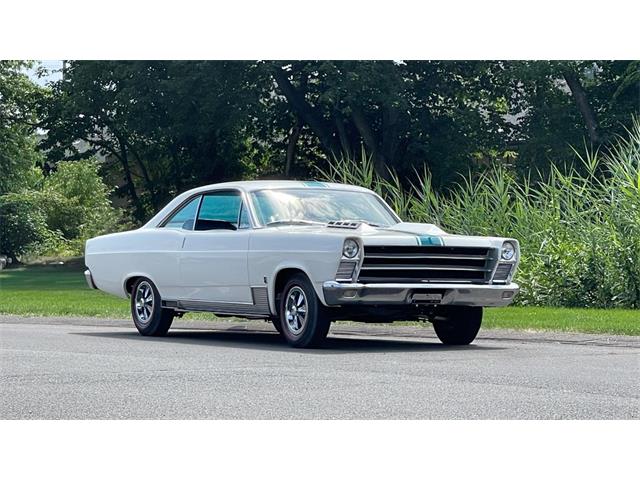
Starting in 1955, Ford's top-of-the line models were in the new
Fairlane series. Lots of chrome, stylish bright metal side trim and
brilliant two-tone combinations were offered. As time moved on,
Fairlane was relegated to lower priced entry-level models hitting
the bottom in 1961. Then, built on the success of the compact
Falcon, Ford introduced for 1962, the new "mid-size" Fairlane,
giving a whole new life to this hallowed name and Ford would score
another market-leading sales success. Over the next several
seasons, Fairlane received updated styling and with the onset of
Ford's Total Performance program, the legendary Fairlane-based
Thunderbolts were created where they ruled drag strips from coast
to coast. For 1966, a total redesign was given to the Fairlane
models. Reflecting many styling cues from the Galaxie and Customs,
the new Fairlane featured flowing body lines that resembled those
full-size cars, including the stacked headlights first seen with
the 1965 models. Even the Fairlane's new taillights reflected
inspiration switching from round circles to soft cornered
rectangles, again similar to the big Ford models. To help introduce
new designs and performance products, Ford created the Custom Car
Caravan which was active from 1962 to 1966, visiting car shows,
county and state fairs and other public events where prospective
car buyers, and those who loved horsepower would gather. Many of
the special cars in this caravan were created using early
production models, running prototypes and in later years, actual
competition vehicles. While Ford often relied on its own in-house
stylists for many of these cars, they also turned to well-known
customizers of the day. Enlisted to help were names that most every
kid knew, such as George Barris, Dean Jeffries, the Alexander
Brothers, Bill Cushenberry, and Gene Winfield. Initially designated
as the new "Fairlane GTX A-Go", it was later shortened to just the
Fairlane GT-X. 1966 saw the introduction of the new Fairlane GT, a
high performance package that was powered by a 330-HP, 390-cid FE
V-8 engine and could be ordered with a four-speed manual
transmission or a C-6 Cruise-O-Matic which then created the GT-A
models. Based on the very low serial number, this car started life
as a pilot production two-door hardtop painted Arcadian Blue with a
standard blue interior. It was diverted to Ford's Prototype
Division for final hand-assembly where the medium riser 427 V-8
engine was installed, backed up by the C6 automatic. Making the
wheels go fast was a 9-inch rear axle with 4.11:1 gears. With the
powertrain in place, the car then left the Dearborn facility and
was shipped across the country in an enclosed transporter to the
shops of noted builder, Gene Winfield on Tully Road in Modesto,
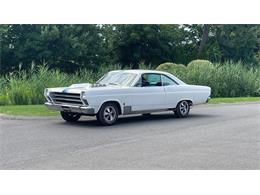
California. That is where a lot of the magic began. The lower
headlights, normally the high-beams, were removed from their front
fender pods and a custom chrome-plated cast metal fixture was added
that allowed for extra intake for that oxygen hungry big-block V-8
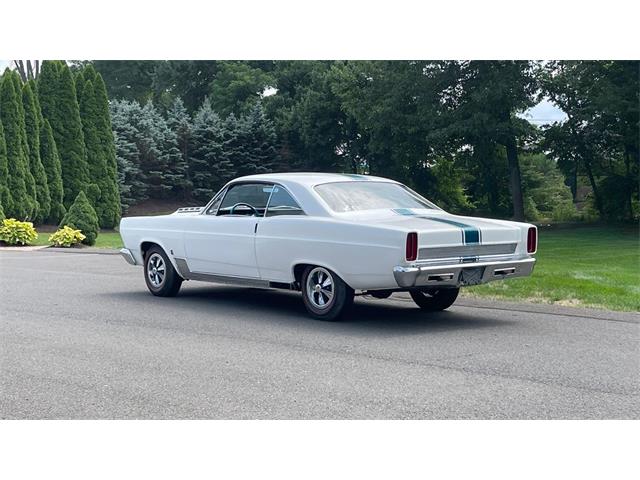
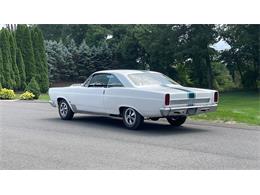
under the hood. To the rear of the car, the taillights were
restyled and blended into the quarter panels with custom red lenses
installed. To the rear, the exhaust outlets were redirected to
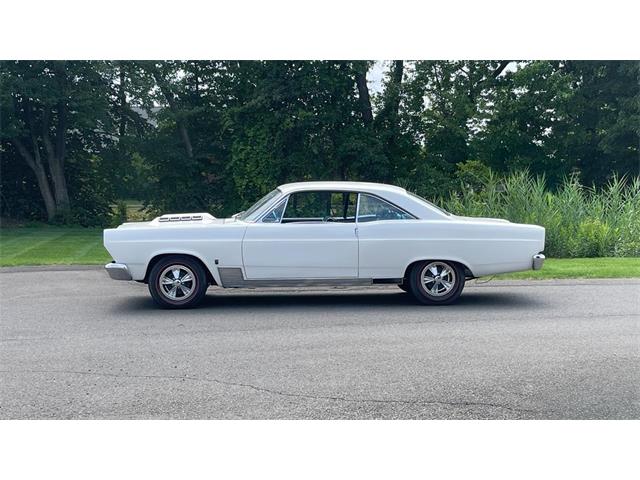
cut-outs in the bumper. However, a concealed device in the
passenger compartment operated special exhaust cut-outs that
directed those escaping gases to special chrome-plated castings
installed on the front fenders behind the wheel openings. The stock
interior was gutted and two pairs of special bucket seats were
fabricated and trimmed in a custom Peacock Blue metal-flake
Naugahyde that was ventilated for comfort. This was, after all,
only a concept vehicle and those bucket seats were bolted directly
to the floor. Other special touches included a special
competition-style steering wheel, Winfield's application of Peacock
Blue interior appointments, and numerous other upgrades and
features. While Winfield, who was noted for his superb body work
and customizing talents, was considered one of the world's best
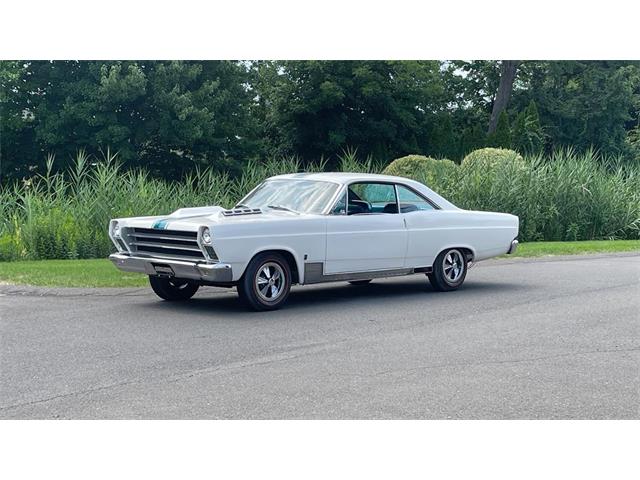
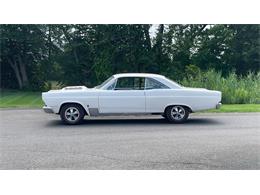
painters and he pulled out all the stops for the GT-X project. A
complete color change ensued, from the factory light blue to a
Metal Flake Pearlescent White accented by a Peacock Blue metallic
stripe down the center of the car. A set of Hurst mag wheels was
also installed, but not before Winfield had worked his color
magical skills on the spokes of these stylish wheels. Special GT-X
nameplates had been created for this car, but Winfield was told not
to install them as someone at Ford had gotten word that Plymouth
was planning for a new performance model for 1967 using the GT-X
moniker. One insider revealed that when the Plymouth did arrive,
the GTX emblems on those cars were identical to the ones originally
planned for this special Fairlane. All of Winfield's work was done
in complete secrecy and once it was done, a transporter truck
showed up in the dead of the night, loaded the Fairlane GT-X into
its trailer and took it back to Dearborn where it would join its
stablemates for the 1966 Custom Car Caravan. As often happens with
show cars, when its traveling days were over, the GT-X was
relegated to a surplus vehicle sale and its history after Ford's
ownership was lost. That is until the early 2000s when a dedicated
1966 Fairlane enthusiast got a call from the sister of the owner
who had passed away. She told him that it was a special car, so he
traveled to Ohio where he immediately recognized what was sitting
in front of him. He acquired the car and brought it home. Knowing
of Gene Winfield's involvement with the car, he called to verify
that he indeed had the original Fairlane GT-X. After both parties
were satisfied of the car's authenticity, Winfield told the owner
that when he was ready to restore and repaint the GT-X, it had to
come to Modesto for the Winfield touch. It took a few years for the
owner to arrange his finances to get this historic vehicle to
Winfield's shop, but when it arrived, Winfield again worked his
magic. His goal was to repaint the car using the same steps and
methods he had performed 45 years earlier. When completed, the
finished project was returned and for several years the Fairlane
GT-X was seen by thousands at cars shows throughout the Midwest.
Our current consignor acquired this one-of-a-kind Ford show car and
has sorted out any maladies found. He reports that the GT-X shows
just over 3,000 miles on the odometer, is in excellent mechanical
condition and presents with "day-one" appearance. He also tells us
that by flipping those concealed cut-out switches, that big-block
427 V-8 makes itself known when the accelerator is depressed. While
the car is operable, it has been reported that due to the fixed
position of the bucket seats, it is best suited for short trips,
such as visiting the winners' circles at various car shows and
concours. This Ford Factory Show Car by legend Gene Winfield,
stands as one of the most historically important Ford muscle cars
of the mid-1960s. Spectacular features and stunning restored
condition, make this iconic muscle car ready for display, use, and
participation in the country's finest and most important
collections and shows. * Ford Factory Custom Car Caravan Feature
Car
* Ford commissioned legendary builder Gene Winfield to create this
iconic car
* Seen and admired by tens of thousands of enthusiast both in
period, and at modern shows
* Incredible features including fantastic Metal Flake Pearlescent
White paint applied by Gene Winfield
* Early pilot model used to promote Fairlane's new look
* High-performance factory-installed 427-cid V-8 engine
* Restored and authenticated by Gene Winfield in the 2000s
* An important part of Ford's 120-year-plus history
Starting...for more information please contact the seller.
ClassicCars.com has been recognized as one of the fastest-growing private companies in the United States, successfully making the Inc. 5000 list in both 2015,
2016, 2017 and 2018. This prestigious accolade represents the continued growth of the company, and ClassicCars.com's dominance as the world's largest online marketplace for
buying and selling classic and collector vehicles.
The Stevie Awards, the world's premier business awards recognized
ClassicCars.com's first-class Customer Support team with a Stevie Bronze Award in 2019, celebrating the team's skills as exemplary customer support specialists.
In 2016 The Journal, brought to you by ClassicCars.com, was celebrated as the SECOND MOST INFLUENTIAL automotive blog in the world by NFC Performance.