Built to outlast, outclass, and out run everything else on the
road, the Duesenberg Model J was quite literally just what their
marketing slogan said, "The World's Finest Motorcar." A result from
E.L. Cord's Automotive Empire, the Model J Duesenberg was no
accident, but a fulfilled quest of becoming the world's fastest and
most elegant production car upon its arrival. Acquiring Duesenberg
in 1926, the Model J made its grand arrival just two short years
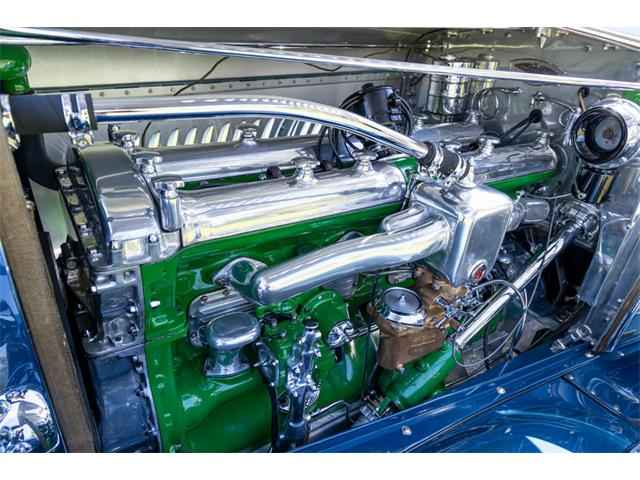
later in December at the New York Auto Show. With a starting cost
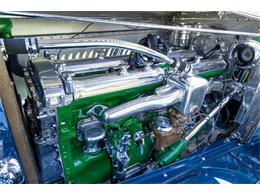
of around $8,500 for just the chassis and the legendary
420-cubic-inch straight eight engine, the average final cost with
coachwork factored in, could range from $13,000 to $20,000 plus.
With such a mighty price tag and considering its arrival was in the
midst of the Great Depression, the Duesenberg Model J wasn't just
built for the 1 percent, but the 0.1 percent. While a large range
of coachbuilders could be called upon, both in the United States as
well as Europe, no two Model Js were alike, each with their own
personal touch or dramatic flair of color. Many different body
styles were offered, but perhaps one of the most iconic and
recognizable was the dual cowl 'Sweep Panel' by LeBaron. As
documented by Duesenberg historians J.L. Elbert and Fred Roe in
their marque books, 2185 / J-156 left the factory as a
long-wheelbase chassis fitted from new with LeBaron's handsome and
sporting dual cowl sweep panel body. While much of the early
history of J-156 has been lost to time, it is understood that this
car suffered a road accident in Pennsylvania in the early 1930s.
Following the crash, it was deemed too costly to repair, and while
some notes suggest the car was "scrapped", the reality is that it
was placed hidden away in storage. Undisturbed for the next
half-century, J-156 ownership would pick up with noted early
Duesenberg collector car pioneer, Leo Gephart in the 1970s. By the
1980s, this dual cowl was acquired by the late Rick Carroll, a
renowned collector, who owned 18 Duesenberg Model Js during his
lifetime. Undertaking a comprehensive restoration, it was
determined that the chassis could not be safely repaired, so an
accurate replacement was sourced. Likewise, the coachwork was
damaged beyond repair, so a new body was faithfully recreated in
the style of the original and commanding LeBaron Sweep Panel Dual
Cowl Phaeton, distinguished by its rakish windscreen, low roof
line, and gracefully sweeping feature lines on the body sides.
Following its restoration to period splendor, Rick Carroll would
show this Model J at the 1987 AACA Special National Fall Meet in
Huntington, West Virginia. Following Rick Carroll's passing in
1989, J-156 would be sold at the same time as his impressive estate
collection in 1990, which consisted of some of the most desirable
Duesenberg Model Js built. The next owner would be another
Duesenberg connoisseur, Carmine Zeccardi of Englewood Cliffs, New
Jersey. Zeccardi would later go on to donate one of his other Model
Js to the Auburn Cord Duesenberg Automobile Museum, J-286, which is
proudly on display today. Under his ownership, J-156 would be shown
at the 1990 AACA Eastern Division National Spring Meet in
Hagerstown, Maryland where it would earn its Senior National award.
A year later, this Model J would appear on the cover of the
January-February Vol. 55, No. 1 1991 Antique Automobile AACA
publication, a copy of which is on file. J-156 was then seen
offered at the 1996 Auburn Spring Auction and then again at the
1996 Auburn Auction & Show over Labor Day Weekend. From there,
J-156 would be sold in 2005, before trading hands in 2011 when it
was then acquired by a noted private North American collection that
has since maintained this J for an extended period of time. A
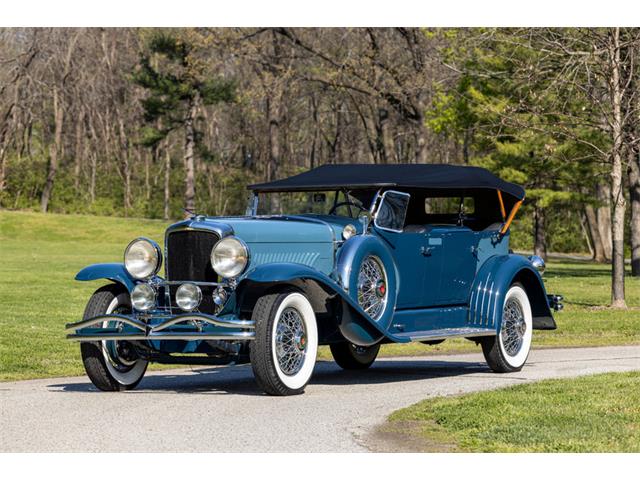
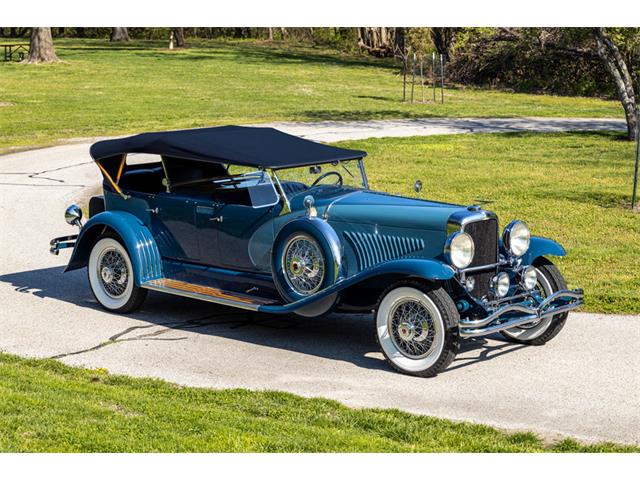
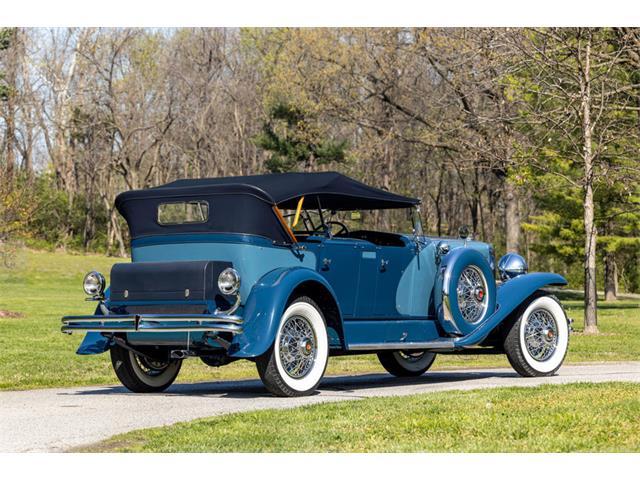
highly attractive color scheme consisting of medium blue on the
body and fenders, with a lighter blue on the sweep panel accents,
other features on the dashing body include various period
accessories like dual side mount spares enclosed by color-matched
metal covers, dual Pilot Ray driving lights, chrome wire wheels, an
early black honeycomb radiator, and a trunk rack with a leather
trunk. Most recently, this Model J was suited with a new, tightly
fitted blue convertible soft top, that elegantly blends with the
overall color scheme and body. This Duesenberg Model J will not
just get you access to an array of noted events, such as the annual
Duesenberg Tour, but it will also grant you access into an
exclusive fraternity of ACD owners that stretches across the globe.
Beautifully presented with its striking LeBaron style coachwork,
handsome livery, and offered with noted ownership history, J-156
represents just what E.L. Cord set out to do, build "The World's
Finest Motorcar". * Equipped with its original LaBaron style 'Sweep
Panel' coachwork
* Resident of multiple noted Duesenberg collectors including Rick
Carroll and Leo Gephart
* AACA National Senior award winner
* Older comprehensive restoration to period splendor and finished
in striking colors
* Among the most sought-after pre-war automobiles ever built
* A Grand Classic eligible for exclusive events, shows, and
tours
Built to outlast, outclass, and out run everything else on the
road, the Duesenberg Model J was quite literally just what their
marketing slogan said, 'The World's Finest Motorcar.' A result from
E.L. Cord's Automotive Empire, the Model J Duesenberg was no
accident, but a fulfilled quest of becoming the world's fastest and
most elegant production car upon its arrival. Acquiring Duesenberg
in 1926, the Model J made its grand arrival just two short years
later in December at the New York Auto Show.
With a starting cost of around $8,500 for just the chassis and the
legendary 420-cubic-inch straight eight engine, the average final
cost with coachwork factored in, could range from $13,000 to
$20,000 plus. With such a mighty price tag and considering its
arrival was in the midst of the Great Depression, the Duesenberg
Model J wasn't just built for the 1 percent, but the 0.1
percent.
While a large range of coachbuilders could be called upon, both in
the United States as well as Europe, no two Model Js were alike,
each with their own personal touch or dramatic flair of color. Many
different body styles were offered, but perhaps one of the most
iconic and recognizable was the dual cowl 'Sweep Panel' by
LeBaron.
As documented by Duesenberg historians J.L. Elbert and Fred Roe in
their marque books, 2185 / J-156 left the factory as a
long-wheelbase chassis fitted from new with LeBaron's handsome and
sporting dual cowl sweep panel body. While much of the early
history of J-156 has been lost to time, it is understood that this
car suffered a road accident in Pennsylvania in the early 1930s.
Following the crash, it was deemed too costly to repair, and while
some notes suggest the car was 'scrapped', the reality is that it
was placed hidden away in storage. Undisturbed for the next
half-century, J-156 ownership would pick up with noted early
Duesenberg collector car pioneer, Leo Gephart in the 1970s. By the
1980s, this dual cowl was acquired by the late Rick Carroll, a
renowned collector, who owned 18 Duesenberg Model Js during his
lifetime. Undertaking a comprehensive restoration, it was
determined that the chassis could not be safely repaired, so an
accurate replacement was sourced. Likewise, the coachwork was
damaged beyond repair, so a new body was faithfully recreated in
the style of the original and commanding LeBaron Sweep Panel Dual
Cowl Phaeton, distinguished by its rakish windscreen, low roof
line, and gracefully sweeping feature lines on the body sides.
Following its restoration to period splendor, Rick Ca...for more
information please contact the seller.
ClassicCars.com has been recognized as one of the fastest-growing private companies in the United States, successfully making the Inc. 5000 list in both 2015,
2016, 2017 and 2018. This prestigious accolade represents the continued growth of the company, and ClassicCars.com's dominance as the world's largest online marketplace for
buying and selling classic and collector vehicles.
The Stevie Awards, the world's premier business awards recognized
ClassicCars.com's first-class Customer Support team with a Stevie Bronze Award in 2019, celebrating the team's skills as exemplary customer support specialists.
In 2016 The Journal, brought to you by ClassicCars.com, was celebrated as the SECOND MOST INFLUENTIAL automotive blog in the world by NFC Performance.