This vehicle has been soldThis vehicle is no longer available for sale on ClassicCars.com. Please set an alert if you would like to be notified as soon as similar vehicles become available.
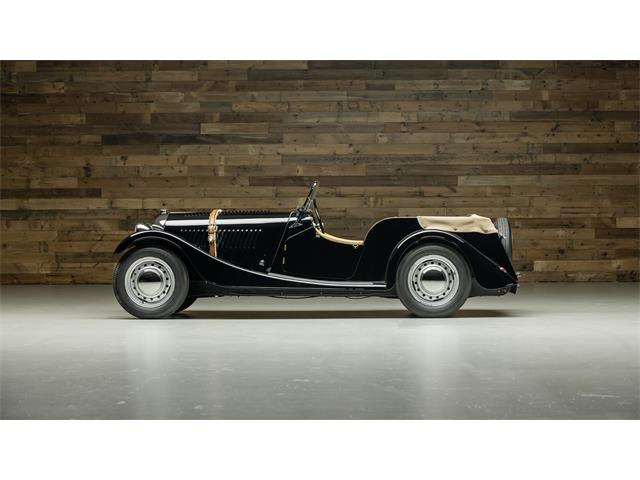
For Sale at Auction: 1952 Morgan Plus 4 in Auburn, Indiana
Offering a performance increase over the long-running 4/4 while
retaining the company's traditional hand-built construction, the
Morgan Plus 4 automobile was introduced in 1950. By 1952, the Plus
4 had firmly established itself as Morgan's sporting flagship,
blending prewar craftsmanship with postwar mechanical
sophistication. Its ash-framed body, aluminum panels, and
lightweight ladder chassis embodied Morgan's philosophy of
simplicity and driver engagement, while the adoption of the
Standard Vanguard four-cylinder engine provided notably stronger
torque and cruising ability than earlier Morgan offerings. The 1952
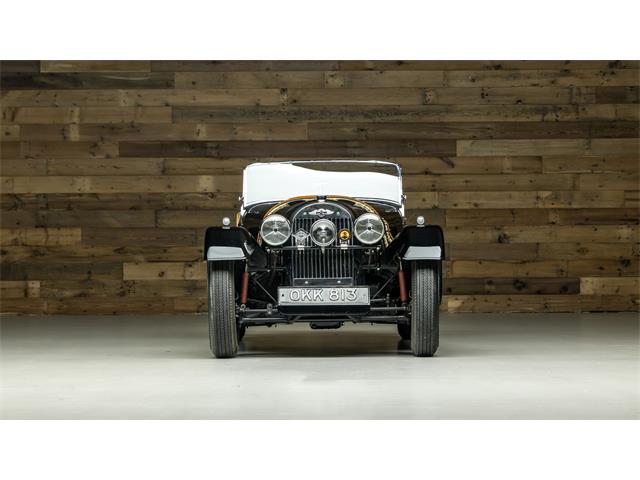
model year became associated with the desirable "flat radiator"
configuration, a transitional and relatively short-lived design.
Unlike the later, more upright cowled radiator shell that became a
Plus 4 hallmark, the flat radiator sat lower and more flush with
the bonnet line, giving the car a cleaner, more understated profile
reminiscent of late prewar Morgans. This earlier nose treatment
also contributed to improved airflow and a subtly sleeker
aesthetic, highly prized by traditionalists today. Capable in
competition and equally adept on touring roads, the Plus 4 quickly
earned a reputation for durability and versatility, competing
successfully in rallies, hill climbs, and long-distance events. The
1952 Morgan Plus 4 stands as an important evolutionary chapter,
bridging classic Morgan design with the higher performance demands
of the postwar sports car era. Acquired by The Oscar Roberts Estate
Collection in December 1993 from MorganFab, this 1952 Morgan Plus 4
"flat radiator" represents a thoughtfully restored example of one
of Britain's most enduring sporting designs. Undergoing a multiyear
comprehensive restoration during the early 2000s, the car was
rebuilt around a newly fabricated chassis supplied by MorganFab, at
which time it was converted from its original right-hand-drive
configuration to its current left-hand-drive layout. Power is
provided by the robust standard Vanguard four-cylinder engine, the
same power plant that would later form the basis for the highly
successful Triumph TR2, offering period-correct performance and
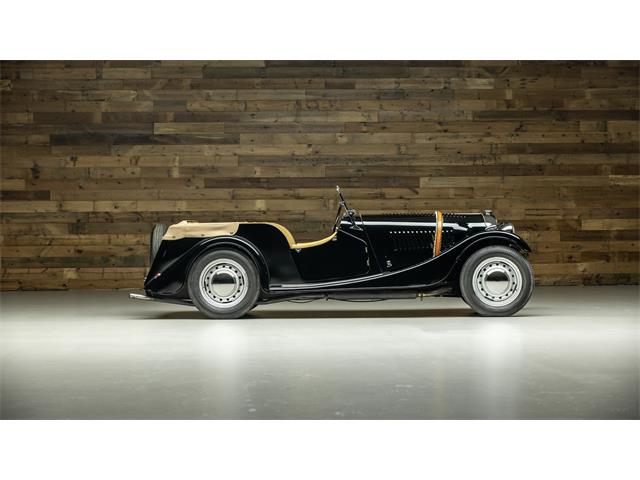
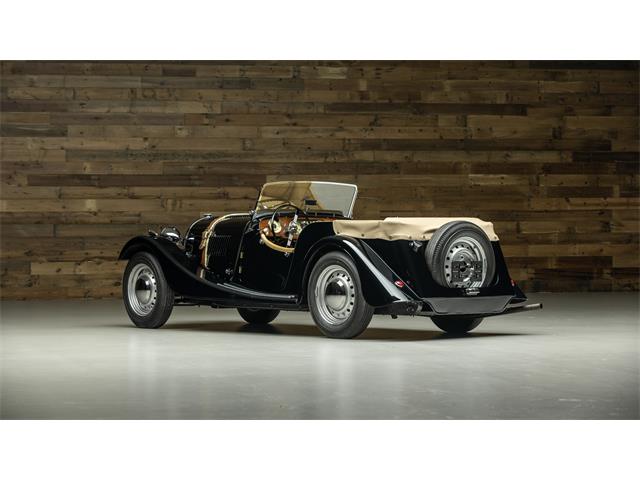
character. The ash wood frame was restored and selectively replaced
as needed, while the doors were refabricated and sheet metal
renewed. Bodywork and paint were completed by David Barbery,
complemented by fresh leather upholstery by Danny Reese. Additional
details that add to its sporty flat-radiator appeal include a
leather bonnet strap with sheep fleece, and Lucas headlamps. Black
Wilton wool carpeting was installed in 2009 by Heritage Upholstery
and Trim and a convertible top by Interiors by Thomas was also
installed at this same time. Mechanical and cosmetic refinements
continued with restored instruments, that Oscar sourced himself
making a direct trip to England, replated brightwork, a rebuilt
radiator by Culpepper Radiator, and the use of an Evan's waterless
coolant. Recognized for its quality after its multiyear
restoration, this Plus 4 earned First Place and the Berry College
President's Choice Award at the 2009 Atlanta British Car Fayre and
was invited and displayed at the Cincinnati Concours d'Elegance.
Accompanying this Morgan is a large file of invoices and records
during Oscar Roberts' long-term 32 years of ownership. One of the
longest standing automobiles within the collection, this
thoughtfully restored 1952 Morgan Plus 4 is a quintessential
British automobile and one that would make a fabulous addition to
one's weekend drives and Cars & Coffee events. * Multiyear
ground-up restoration
* New frame made by MorganFab
* Desirable "flat radiator" example
* Acquired by the Collection 32 years ago
Offering a performance increase over the long-running 4/4 while
retaining the company's traditional hand-built construction, the
Morgan Plus 4 automobile was introduced in 1950. By 1952, the Plus
4 had firmly established itself as Morgan's sporting flagship,
blending prewar craftsmanship with postwar mechanical
sophistication. Its ash-framed body, aluminum panels, and
lightweight ladder chassis embodied Morgan's philosophy of
simplicity and driver engagement, while the adoption of the
Standard Vanguard four-cylinder engine provided notably stronger
torque and cruising ability than earlier Morgan offerings.
The 1952 model year became associated with the desirable "flat
radiator" configuration, a transitional and relatively short-lived
design. Unlike the later, more upright cowled radiator shell that
became a Plus 4 hallmark, the flat radiator sat lower and more
flush with the bonnet line, giving the car a cleaner, more
understated profile reminiscent of late prewar Morgans. This
earlier nose treatment also contributed to improved airflow and a
subtly sleeker aesthetic, highly prized by traditionalists today.
Capable in competition and equally adept on touring roads, the Plus
4 quickly earned a reputation for durability and versatility,
competing successfully in rallies, hill climbs, and long-distance
events. The 1952 Morgan Plus 4 stands as an important evolutionary
chapter, bridging classic Morgan design with the higher performance
demands of the postwar sports car era.
Acquired by The Oscar Roberts Estate Collection in December 1993
from MorganFab, this 1952 Morgan Plus 4 "flat radiator" represents
a thoughtfully restored example of one of Britain's most enduring
sporting designs. Undergoing a multiyear comprehensive restoration
during the early 2000s, the car was rebuilt around a newly
fabricated chassis supplied by MorganFab, at which time it was
converted from its original right-hand-drive configuration to its
current left-hand-drive layout.
Power is provided by the robust standard Vanguard four-cylinder
engine, the same power plant that would later form the basis for
the highly successful Triumph TR2, offering period-correct
performance and character. The ash wood frame was restored and
selectively replaced as needed, while the doors were refabricated
and sheet metal renewed. Bodywork and paint were completed by David
Barbery, complemented by fresh leather upholstery by Danny Reese.
Additional details that add to its sporty flat-radiator appeal
include a leather bonnet strap with sheep fleece, and Lucas
headlamps. Black Wilton wool carpeting was installed in 2009 by
Heritage Upholstery and Trim and a convertible top by Interiors by
Thomas was also installed at this same time.
Mechanical and cosmetic refinements continued with restored
instruments, that Oscar sourced himself making a direct trip to
England, replated brightwork, a rebuilt radiator by Culpepper
Radiator, and the use of an Evan's waterless coolant. Recognized
for its quality after its multiyear restoration, this Plus 4 earned
First Place and the Berry College President's Choice Award at the
2009 Atlanta British Car Fayre and was invited and displayed at the
Cincinnati Concours d'Elegance.
Accompanying this Morgan is a large file of invoices and records
during Oscar Roberts' long-term 32 years of ownership. One of the
longest standing automobiles within the collection, this
thoughtfully restored 1952 Morgan Plus 4 is a quintessential
British automobile and one that would make a fabulous addition to
one's weekend drives and Cars & Coffee events.
ClassicCars.com has been recognized as one of the fastest-growing private companies in the United States, successfully making the Inc. 5000 list in both 2015,
2016, 2017 and 2018. This prestigious accolade represents the continued growth of the company, and ClassicCars.com's dominance as the world's largest online marketplace for
buying and selling classic and collector vehicles.
The Stevie Awards, the world's premier business awards recognized
ClassicCars.com's first-class Customer Support team with a Stevie Bronze Award in 2019, celebrating the team's skills as exemplary customer support specialists.
In 2016 The Journal, brought to you by ClassicCars.com, was celebrated as the SECOND MOST INFLUENTIAL automotive blog in the world by NFC Performance.