Introduced in 1948, the Jaguar XK120 emerged as a defining postwar
sports car, signaling Jaguar cars' return to the global stage with
renewed confidence and technical ambition. Originally unveiled at
the London Motor Show as a showcase for Jaguar's advanced new XK
engine, the sleek roadster generated such overwhelming enthusiasm
that it quickly transitioned from a limited prototype into
full-scale production. At a time when much of Europe was still
rebuilding, the XK120 represented optimism and performance,
offering a level of speed and refinement rarely seen in its class.
Central to the XK120's success was its revolutionary 3.4-litre dual
overhead cam inline six-cylinder engine, an engineering achievement
that would go on to power Jaguar models for decades. Producing up
to 160 horsepower in standard form, the XK120 was capable of
reaching 120 miles per hour, hence its name, making it the fastest
production car in the world at the time. Early examples featured
lightweight aluminum bodies over ash frames, but by 1950,
production shifted to more cost-effective steel construction while
retaining the car's elegant, flowing lines. By 1954, the XK120
Roadster had evolved into a refined and highly desirable sports
car, benefiting from incremental improvements in reliability,
comfort, and build quality. The Roadster offered a pure driving
experience, with cut-down doors, removable side curtains, and
minimal weather protection, emphasizing performance over luxury.
Its low-slung stance, long hood, and sweeping fenders reflected
both aerodynamic consideration and unmistakable British style. The
XK120's motorsport pedigree further cemented its reputation,
achieving success in rallies and endurance events, including strong
performances at the 24 Hours of Le Mans. By the mid-1950s, it had
firmly established Jaguar as a dominant force in international
sports car racing. Today, the 1954 Jaguar XK120 Roadster stands as
a landmark in automotive history, a harmonious blend of beauty,
innovation, and performance that helped define the golden age of
motoring. Offered from the final production year of the sensational
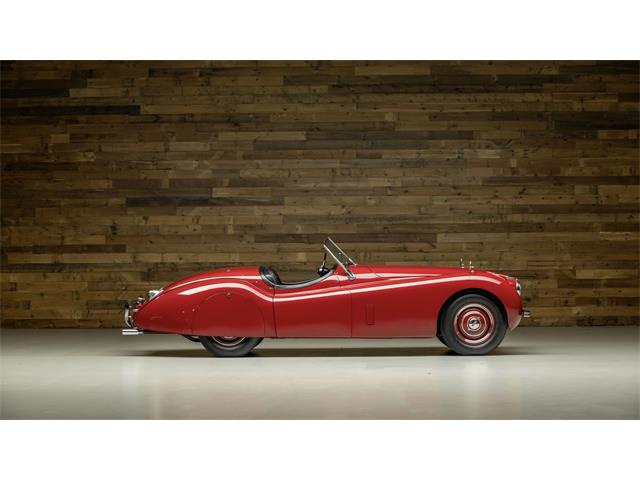
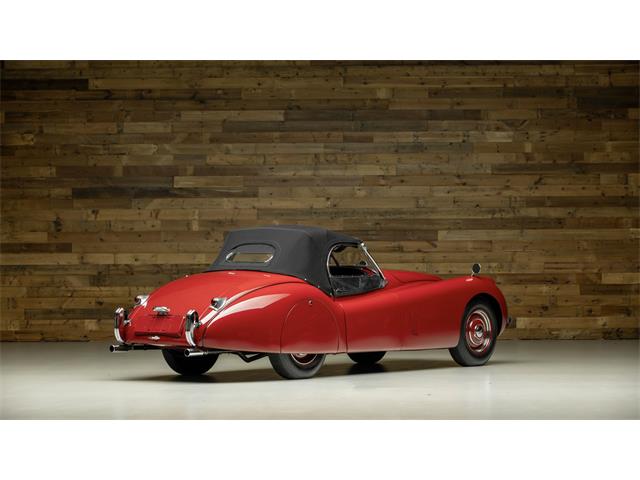
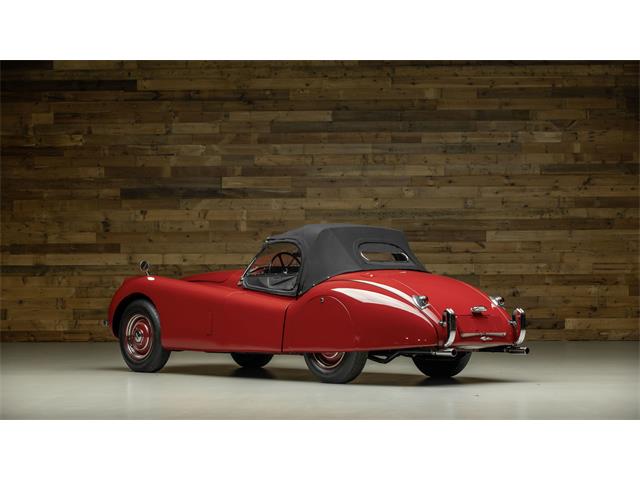
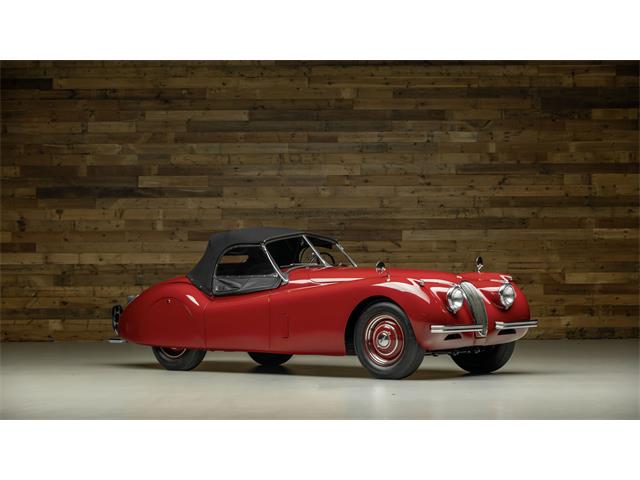
Jaguar XK120, is this 1954 example. As of one the most recognizable
British automobiles to be produced; the flowing body lines are
draped in a dark red paint that properly blends with the black
convertible soft top and full-size wheel covers wrapped in
blackwall tires. Under the bonnet lies a 3.4-litre dual-overhead
cam inline six-cylinder engine that made these models so famous.
Paired with a four-speed manual gearbox, it becomes a refined
driving automobile that offers a memorable experience. Accompanying
this Jaguar are rear fender skirts, matching black side windows, a
tool roll, and spare wheel tucked in the trunk. A true expression
of Jaguar's postwar brilliance, this XK120 offers an ideal
opportunity to experience one of the most celebrated sports cars of
its era exactly as intended, open, engaging, and unmistakably
elegant. * Final year of the XK120
* Attractive colors; dark red paint draped on its flowing body
lines
* Accompanied by a soft top, side windows, and rear fender
skirts
* A harmonious blend of beauty, innovation, and performance
Introduced in 1948, the Jaguar XK120 emerged as a defining postwar
sports car, signaling Jaguar cars' return to the global stage with
renewed confidence and technical ambition. Originally unveiled at
the London Motor Show as a showcase for Jaguar's advanced new XK
engine, the sleek roadster generated such overwhelming enthusiasm
that it quickly transitioned from a limited prototype into
full-scale production. At a time when much of Europe was still
rebuilding, the XK120 represented optimism and performance,
offering a level of speed and refinement rarely seen in its
class.
Central to the XK120's success was its revolutionary 3.4-litre dual
overhead cam inline six-cylinder engine, an engineering achievement
that would go on to power Jaguar models for decades. Producing up
to 160 horsepower in standard form, the XK120 was capable of
reaching 120 miles per hour, hence its name, making it the fastest
production car in the world at the time. Early examples featured
lightweight aluminum bodies over ash frames, but by 1950,
production shifted to more cost-effective steel construction while
retaining the car's elegant, flowing lines.
By 1954, the XK120 Roadster had evolved into a refined and highly
desirable sports car, benefiting from incremental improvements in
reliability, comfort, and build quality. The Roadster offered a
pure driving experience, with cut-down doors, removable side
curtains, and minimal weather protection, emphasizing performance
over luxury. Its low-slung stance, long hood, and sweeping fenders
reflected both aerodynamic consideration and unmistakable British
style.
The XK120's motorsport pedigree further cemented its reputation,
achieving success in rallies and endurance events, including strong
performances at the 24 Hours of Le Mans. By the mid-1950s, it had
firmly established Jaguar as a dominant force in international
sports car racing. Today, the 1954 Jaguar XK120 Roadster stands as
a landmark in automotive history, a harmonious blend of beauty,
innovation, and performance that helped define the golden age of
motoring.
Offered from the final production year of the sensational Jaguar
XK120, is this 1954 example. As of one the most recognizable
British automobiles to be produced; the flowing body lines are
draped in a dark red paint that properly blends with the black
convertible soft top and full-size wheel covers wrapped in
blackwall tires.
Under the bonnet lies a 3.4-litre dual-overhead cam inline
six-cylinder engine that made these models so famous. Paired with a
four-speed manual gearbox, it becomes a refined driving automobile
that offers a memorable experience.
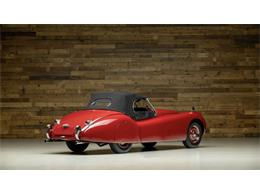
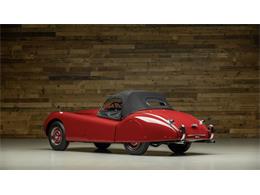
Accompanying this Jaguar are rear fender skirts, matching black
side windows, a tool roll, and spare wheel tucked in the trunk. A
true expression of Jaguar's postwar brilliance, this XK120 offers
an ideal opportunity to experience one of the most celebrated
sports cars of its era exactly as intended, open, engaging, and
unmistakably elegant.
ClassicCars.com has been recognized as one of the fastest-growing private companies in the United States, successfully making the Inc. 5000 list in both 2015,
2016, 2017 and 2018. This prestigious accolade represents the continued growth of the company, and ClassicCars.com's dominance as the world's largest online marketplace for
buying and selling classic and collector vehicles.
The Stevie Awards, the world's premier business awards recognized
ClassicCars.com's first-class Customer Support team with a Stevie Bronze Award in 2019, celebrating the team's skills as exemplary customer support specialists.
In 2016 The Journal, brought to you by ClassicCars.com, was celebrated as the SECOND MOST INFLUENTIAL automotive blog in the world by NFC Performance.