Always built to the highest standards, the Packard was
unquestionably one of the finest American cars of the prewar era
and deservedly popular on this side of the Atlantic. The Packard
ranked alongside the world's top luxury makes and was a frequent
sight at the most exclusive society functions of its era, being
favored by film stars, celebrities and plutocrats. First introduced
in 1924, the Eight was notable as the first Packard to employ
four-wheel brakes. Its side-valve straight-eight engine developed
85bhp from 358 cubic inches, and the Eight lineup initially
comprised ten models on two wheelbase lengths. In 1927, the engine
was enlarged to 384-cid and a smaller 319-cid Standard Eight was
introduced for 1929, the larger engine continuing to power the
Custom and DeLuxe Eights. The latter was renamed 'Super Eight' for
1933, by which time all Packards featured synchromesh transmission.
Introduced for the 1935 season, the 'One Twenty' (120) Eight, also
known as the 'Junior Packard', represented the company's first
foray into the medium-priced market sector. Engine improvements
were introduced year by year, the big news for 1937 being the
introduction of the 320-cid engine on the larger Eight together
with independent front suspension and hydraulic brakes. Although
Packard kept genuine phaetons-four-door open cars without side
windows-in production through 1936, by then the convertible sedan
had fairly well taken over the four-door open car market. Up until
1930, the convertible sedan had been catalogued as an "Individual
Custom" that had been designed and built by the likes of Brewster
or Dietrich. In 1931, it became a production style in the Standard
Eight line and could be ordered, but it never appeared in the
literature. For 1932, it was added to the Deluxe Eight and the new
Twin Six lines. The design was from Dietrich, but Raymond Dietrich
himself had moved on, and his small coachbuilding business was
operating in the factory of Murray Body Corporation, which built
most of Packard's production models. The convertible sedan was the
most expensive car in its respective series, and it continued to
mature over the years. Until 1935, the rear doors opened in
"suicide," rear-hinged fashion, in contrast to the phaetons, which
hinged on the B-pillar. Chassis refinements tracked those in other
styles of the Senior series, including independent front suspension
and hydraulic brakes in 1937 and a vee'd windshield in 1938. Apart
from catalogue customs from Brunn and Rollston, the
Dietrich-designed convertible sedan was the most expensive
eight-cylinder Packard, with a price of $3,970. This impressive
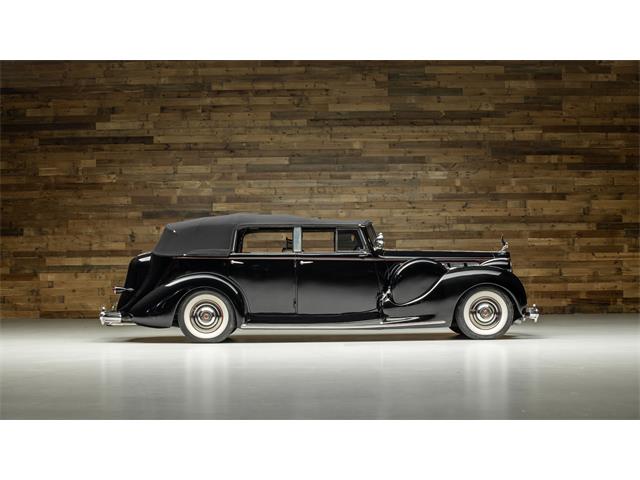
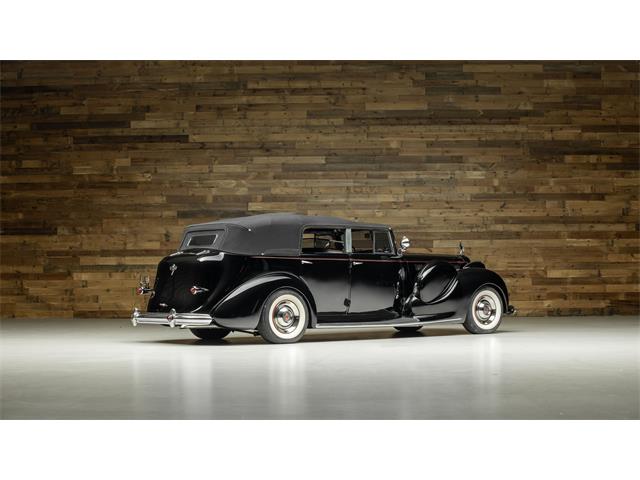
Packard has been upgraded from its original straight-eight engine
to a 500-cubic-inch V-8 Cadillac engine with automatic
transmission. The Cadillac 500 engine is known for its power and
massive torque, as well as its smoothness and reliability, making
it the perfect choice to move this large automobile down the
highway in a fashion Packard engineers back in 1938 could only
dream of. Furthering its drivability, this Packard is equipped with
an air-conditioning system, making this the ultimate long-distance
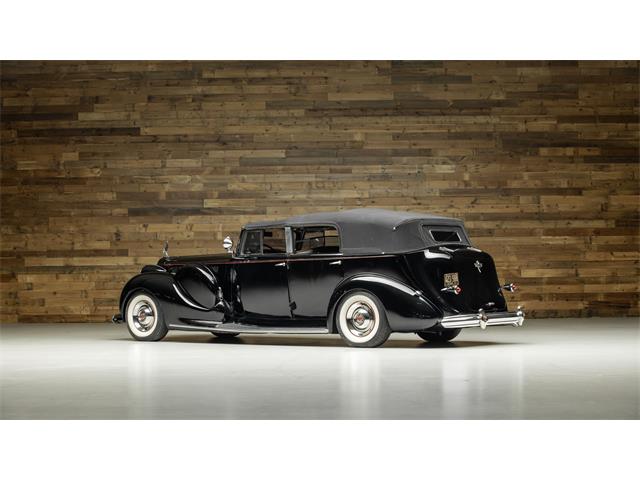
tour car if desired. Luxury features include a leather driver's
seat with original-style cloth upholstery in the rear and a divider
glass. Dual side-mounted spare tires and spotlights add to the
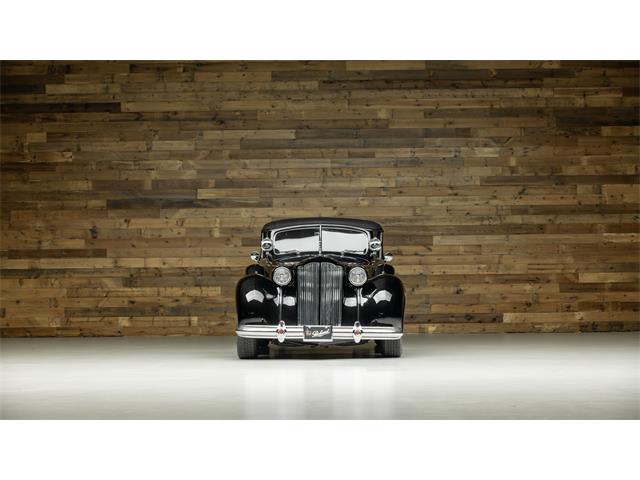
charm of this Packard. At a glance, this Packard appears as
original and unmodified. The interior is restored to largely
original standards as well. Only when looking under the hood, or
stepping on the gas, does it become known that there is plenty of
power to go with its classic style, making it as fun to drive as it
is to look at. * Thoughtfully updated and modified Custom Packard
for extended touring
* 500-cubic-inch Cadillac V-8 with 4bbl carbs
* Modified drivetrain and automatic transmission
* Air-conditioning and heat
* Stylish body style with divider glass
* Dual spotlights and dual enclosed side-mounted spares
Always built to the highest standards, the Packard was
unquestionably one of the finest American cars of the prewar era
and deservedly popular on this side of the Atlantic. The Packard
ranked alongside the world's top luxury makes and was a frequent
sight at the most exclusive society functions of its era, being
favored by film stars, celebrities and plutocrats. First introduced
in 1924, the Eight was notable as the first Packard to employ
four-wheel brakes. Its side-valve straight-eight engine developed
85bhp from 358 cubic inches, and the Eight lineup initially
comprised ten models on two wheelbase lengths. In 1927, the engine
was enlarged to 384-cid and a smaller 319-cid Standard Eight was
introduced for 1929, the larger engine continuing to power the
Custom and DeLuxe Eights. The latter was renamed 'Super Eight' for
1933, by which time all Packards featured synchromesh transmission.
Introduced for the 1935 season, the 'One Twenty' (120) Eight, also
known as the 'Junior Packard', represented the company's first
foray into the medium-priced market sector. Engine improvements
were introduced year by year, the big news for 1937 being the
introduction of the 320-cid engine on the larger Eight together
with independent front suspension and hydraulic brakes.
Although Packard kept genuine phaetons-four-door open cars without
side windows-in production through 1936, by then the convertible
sedan had fairly well taken over the four-door open car market. Up
until 1930, the convertible sedan had been catalogued as an
"Individual Custom" that had been designed and built by the likes
of Brewster or Dietrich. In 1931, it became a production style in
the Standard Eight line and could be ordered, but it never appeared
in the literature. For 1932, it was added to the Deluxe Eight and
the new Twin Six lines. The design was from Dietrich, but Raymond
Dietrich himself had moved on, and his small coachbuilding business
was operating in the factory of Murray Body Corporation, which
built most of Packard's production models.
The convertible sedan was the most expensive car in its respective
series, and it continued to mature over the years. Until 1935, the
rear doors opened in "suicide," rear-hinged fashion, in contrast to
the phaetons, which hinged on the B-pillar. Chassis refinements
tracked those in other styles of the Senior series, including
independent front suspension and hydraulic brakes in 1937 and a
vee'd windshield in 1938. Apart from catalogue customs from Brunn
and Rollston, the Dietrich-designed convertible sedan was the most
expensive eight-cylinder Packard, with a price of $3,970.
This impressive Packard has been upgraded from its original
straight-eight engine to a 500-cubic-inch V-8 Cadillac engine with
automatic transmission. The Cadillac 500 engine is known for its
power and massive torque, as well as its smoothness and
reliability, making it the perfect choice to move this large
automobile down the highway in a fashion Packard engineers back in
1938 could only dream of. Furthering its drivability, this Packard
is equipped with an air-conditioning system, making this the
ultimate long-distance tour car if desired. Luxury features include
a leather driver's seat with original-style cloth upholstery in the
rear and a divider glass. Dual side-mounted spare tires and
spotlights add to the charm of this Packard.
At a glance, this Packard appears as original and unmodified. The
interior is restored to largely original standards as well. Only
when looking under the hood, or stepping on the gas, does it become
known that there is plenty of power to go with its classic style,
making it as fun to drive as it is to look at.
ClassicCars.com has been recognized as one of the fastest-growing private companies in the United States, successfully making the Inc. 5000 list in both 2015,
2016, 2017 and 2018. This prestigious accolade represents the continued growth of the company, and ClassicCars.com's dominance as the world's largest online marketplace for
buying and selling classic and collector vehicles.
The Stevie Awards, the world's premier business awards recognized
ClassicCars.com's first-class Customer Support team with a Stevie Bronze Award in 2019, celebrating the team's skills as exemplary customer support specialists.
In 2016 The Journal, brought to you by ClassicCars.com, was celebrated as the SECOND MOST INFLUENTIAL automotive blog in the world by NFC Performance.