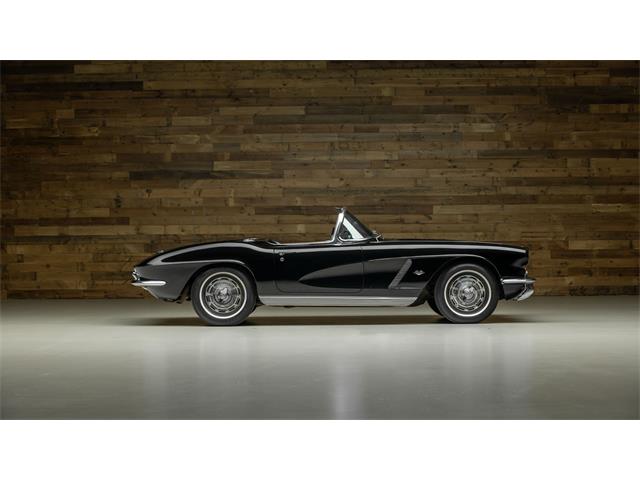
Introduced as part of the first-generation Corvette, the 1962
Chevrolet Corvette marked the final and most refined year of the C1
era, bringing with it significant mechanical improvements and a
more mature, purposeful design. By this point, Chevrolet had fully
transformed the Corvette from a stylish boulevard cruiser into a
legitimate American sports car, capable of competing with its
European counterparts in both performance and handling. The 1962
model shed much of the decorative chrome seen on earlier cars,
adopting a cleaner, more aggressive look highlighted by simplified
body lines. Under the hood, the Corvette received one of its most
important advancements: the introduction of the 327-cubic-inch
small-block V-8 engine. Replacing the 283, the 327 offered
increased displacement and improved breathing, delivering stronger
performance across the entire rev range. In its 300-horsepower
configuration, the engine was equipped with a four-barrel
carburetor and hydraulic lifters, providing a smooth yet responsive
driving experience. This version struck an ideal balance, offering
robust power while maintaining reliability and drivability,
qualities that made it especially appealing to a wide range of
enthusiasts. Buyers could pair the 327/300 engine with either a
manual transmission, or an optional automatic, allowing the
Corvette to offer both spirited driving and relaxed cruising. The
independent front suspension and improved chassis tuning further
enhanced handling, making the car feel more composed and capable
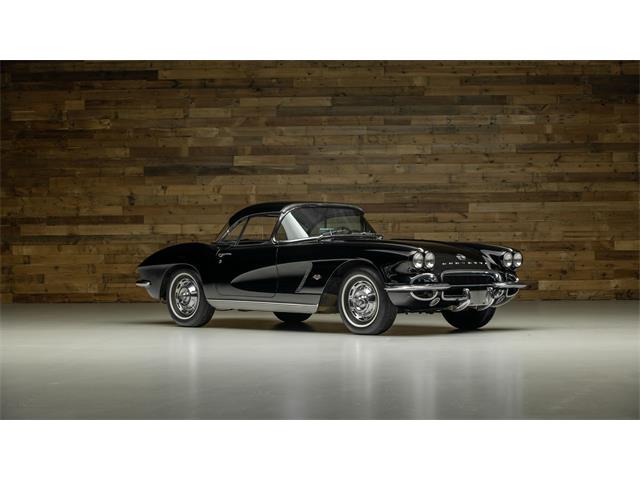
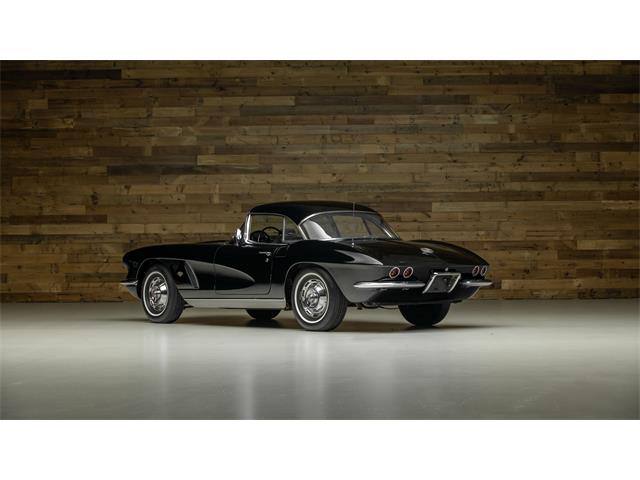
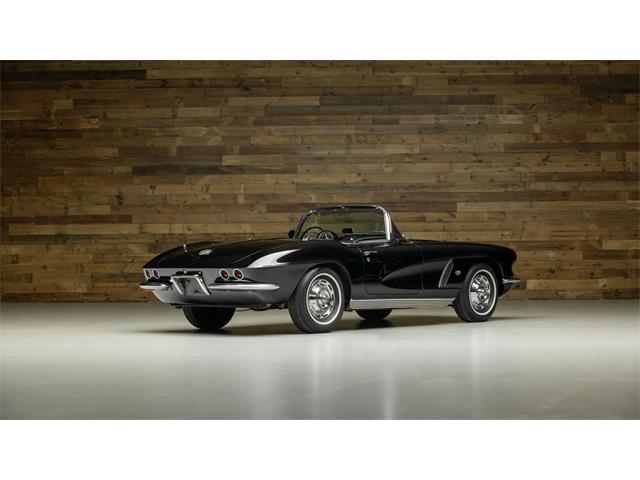
than earlier iterations. A largely original example, this 1962
Chevrolet Corvette is finished in factory Tuxedo Black over its
original black interior. The final year of the historic C1
Corvette, it carries all the styling cues that made these examples
famous. The black interior features a clock, radio, seat belts,
three-spoke steering wheel, and passenger side dash-mounted grab
bar. Under the hood lies a numbers-matching 327-cubic-inch V-8 that
produces 300 horsepower and is backed by a four-speed manual
transmission. Accompanied by both a soft top and color-matched
auxiliary hardtop, it offers motoring enjoyment in various types of
weather. As the last of the solid-axle Corvettes, the 1962 model
represents a pivotal moment in the car's evolution. It captures the
culmination of nearly a decade of refinement, blending classic
styling with meaningful performance upgrades, and remains a highly
regarded example of early American sports car engineering. * A
largely original factory black example
* Numbers-matching 327-cubic-inch 300-horsepower V-8 engine
* The final and most refined year of the C1
* Accompanied by a convertible soft top and removable hardtop
Introduced as part of the first-generation Corvette, the 1962
Chevrolet Corvette marked the final and most refined year of the C1
era, bringing with it significant mechanical improvements and a
more mature, purposeful design. By this point, Chevrolet had fully
transformed the Corvette from a stylish boulevard cruiser into a
legitimate American sports car, capable of competing with its
European counterparts in both performance and handling. The 1962
model shed much of the decorative chrome seen on earlier cars,
adopting a cleaner, more aggressive look highlighted by simplified
body lines.
Under the hood, the Corvette received one of its most important
advancements: the introduction of the 327-cubic-inch small-block
V-8 engine. Replacing the 283, the 327 offered increased
displacement and improved breathing, delivering stronger
performance across the entire rev range. In its 300-horsepower
configuration, the engine was equipped with a four-barrel
carburetor and hydraulic lifters, providing a smooth yet responsive
driving experience. This version struck an ideal balance, offering
robust power while maintaining reliability and drivability,
qualities that made it especially appealing to a wide range of
enthusiasts.
Buyers could pair the 327/300 engine with either a manual
transmission, or an optional automatic, allowing the Corvette to
offer both spirited driving and relaxed cruising. The independent
front suspension and improved chassis tuning further enhanced
handling, making the car feel more composed and capable than
earlier iterations.
A largely original example, this 1962 Chevrolet Corvette is
finished in factory Tuxedo Black over its original black interior.
The final year of the historic C1 Corvette, it carries all the
styling cues that made these examples famous. The black interior
features a clock, radio, seat belts, three-spoke steering wheel,
and passenger side dash-mounted grab bar. Under the hood lies a
numbers-matching 327-cubic-inch V-8 that produces 300 horsepower
and is backed by a four-speed manual transmission. Accompanied by
both a soft top and color-matched auxiliary hardtop, it offers
motoring enjoyment in various types of weather.
As the last of the solid-axle Corvettes, the 1962 model represents
a pivotal moment in the car's evolution. It captures the
culmination of nearly a decade of refinement, blending classic
styling with meaningful performance upgrades, and remains a highly
regarded example of early American sports car engineering.
ClassicCars.com has been recognized as one of the fastest-growing private companies in the United States, successfully making the Inc. 5000 list in both 2015,
2016, 2017 and 2018. This prestigious accolade represents the continued growth of the company, and ClassicCars.com's dominance as the world's largest online marketplace for
buying and selling classic and collector vehicles.
The Stevie Awards, the world's premier business awards recognized
ClassicCars.com's first-class Customer Support team with a Stevie Bronze Award in 2019, celebrating the team's skills as exemplary customer support specialists.
In 2016 The Journal, brought to you by ClassicCars.com, was celebrated as the SECOND MOST INFLUENTIAL automotive blog in the world by NFC Performance.