In 1925, Rolls-Royce began production of the replacement for its
venerable, groundbreaking Silver Ghost. The New Phantom was
developed on the back of nearly two decades of Silver Ghost
production, during which time countless improvements to the engine
and chassis were made. Perhaps the biggest challenge faced by
engineers was how to improve upon what was then seen as the best
car in the world - so it is perhaps unsurprising that the New
Phantom relied on the solid foundation built by Silver Ghost. The
New Phantom chassis was essentially unchanged from the very final
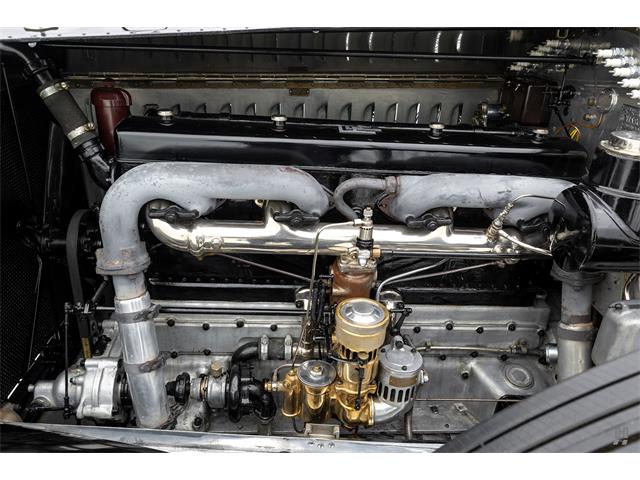
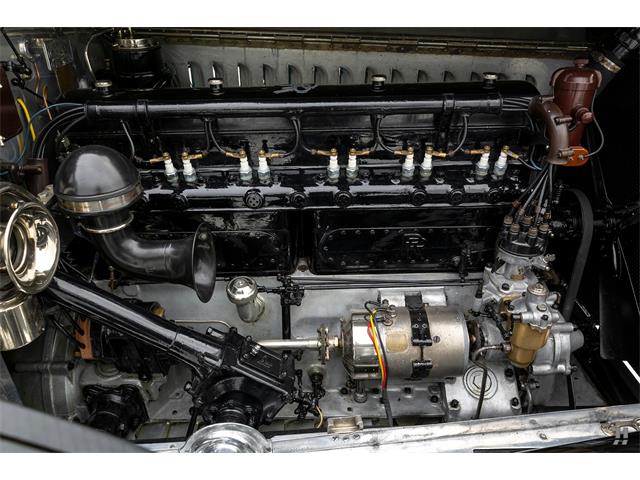
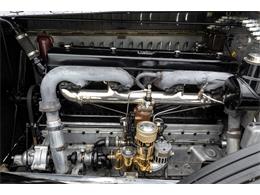
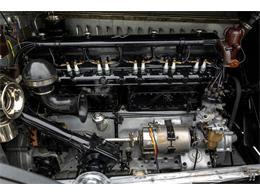
evolution of the Silver Ghost, yet beneath the bonnet sat an
all-new 7.7-litre inline six-cylinder engine with pushrod-operated
overhead valves. The new engine effectively surpassed the Ghost's
refined but admittedly antiquated side-valve unit. The new OHV
engine retained the expected refinement while delivering greater
power and performance.
Like the 40/50 HP Silver Ghost before it, the New Phantom
(retroactively known as the "Phantom I" after the arrival of the
Phantom II) was produced both in Rolls-Royce's traditional Derby
home, and in parallel at Rolls-Royce of America's Springfield,
Massachusetts factory, with the latter accounting for 1,241 of the
total 3,453 Phantom I chassis. As always, Rolls-Royce was a chassis
manufacturer, and coachwork was entrusted to outside firms - though
many, like Park Ward, Brewster, and Hooper had close ties to the
factory, offering various "catalogue" designs from which to choose.
Of course, there was always the option of something rather more
individual.
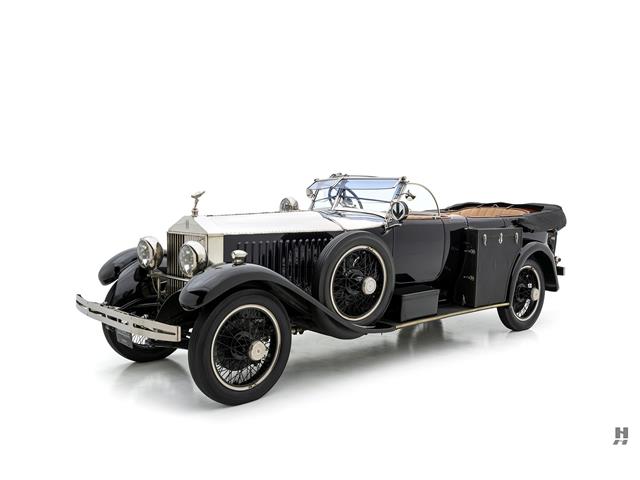
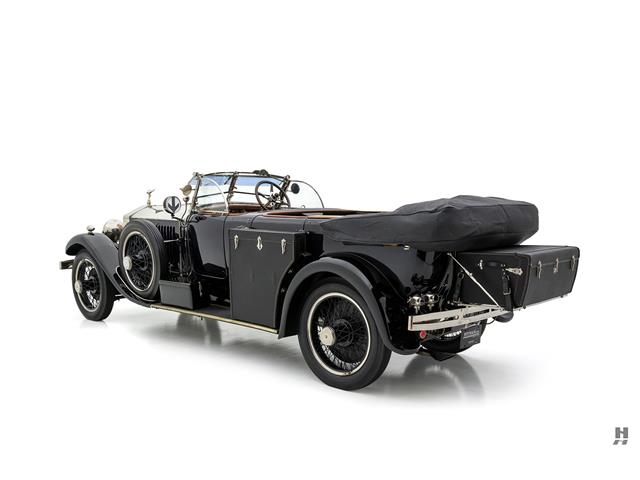
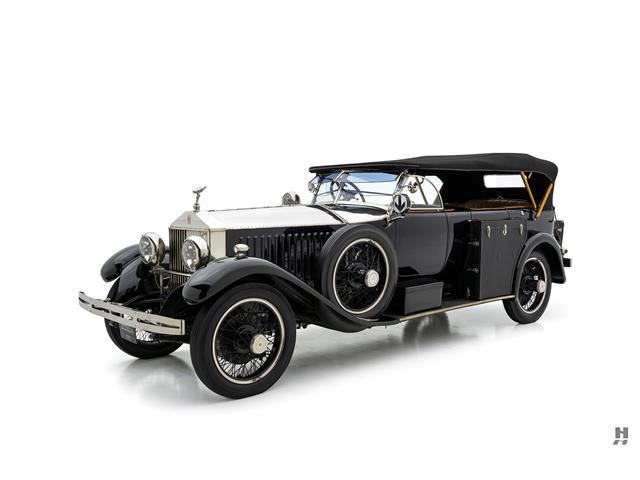
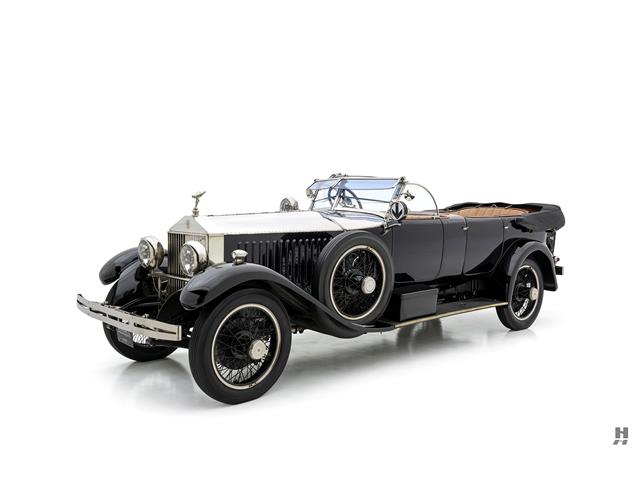
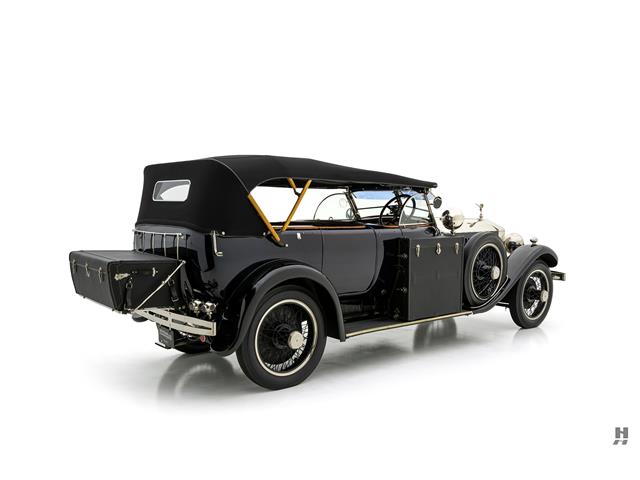
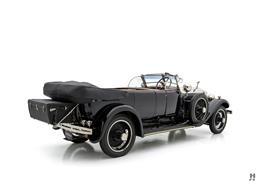
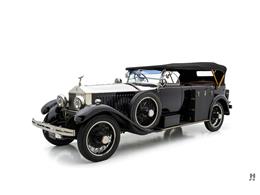
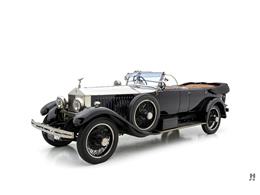
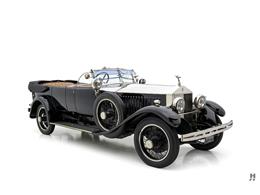
This 1926 Derby-built Phantom, chassis no. 98LC, is one of the most
stunning examples of bespoke custom coachwork we've seen on a New
Phantom. This breathtaking Dual Windshield Torpedo Phaeton "Grand
Luxe" body is by Van den Plas of Belgium, built at the behest of
its first owner, Mr. Estevao Van Zeller of Lisbon, Portugal.
Factory records show that delivery took place in June 1926 at the
Rolls-Royce factory showroom at Lillie Hall. Clearly built with no
expense spared, this beautiful coachwork is not only exquisitely
proportioned in the finest sporting tradition but is also packed
with extraordinary details and luxury fittings, feeling like a
'private club on wheels.'
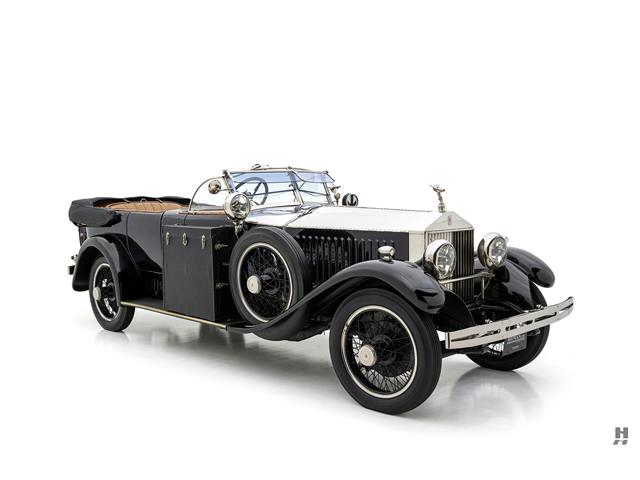
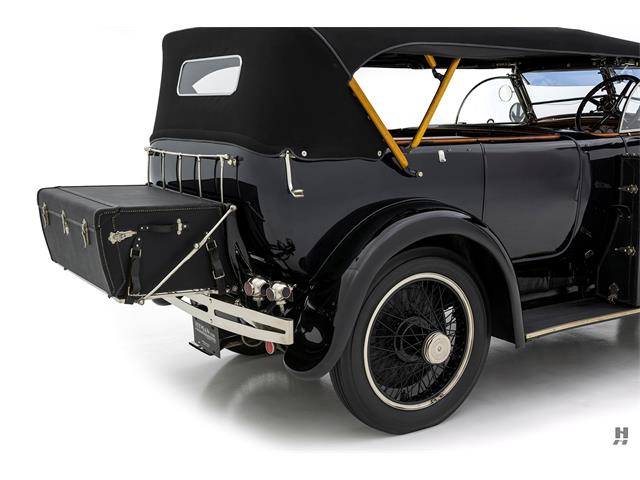
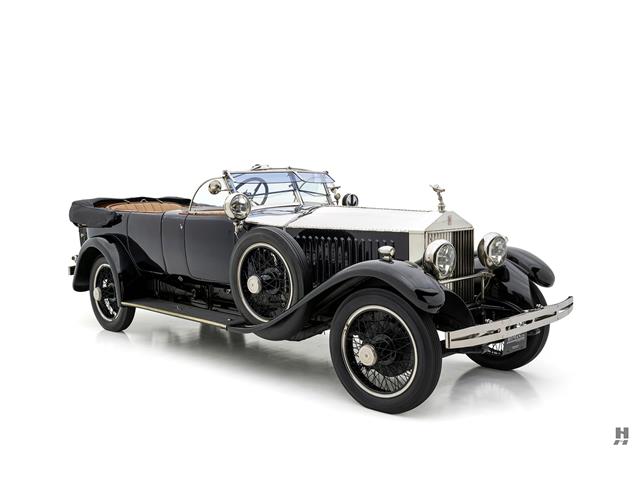
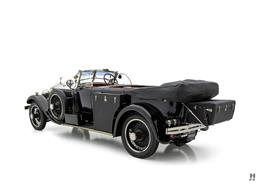
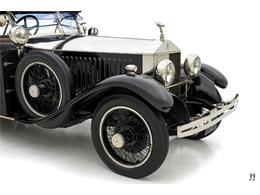
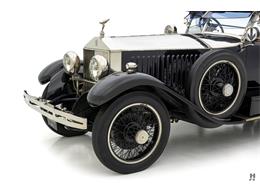
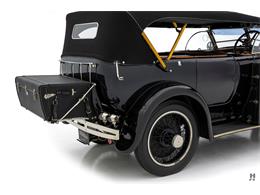
The body itself is a beautiful example of a Torpedo Phaeton,
characterized by steeply raked windscreens front and rear, flowing
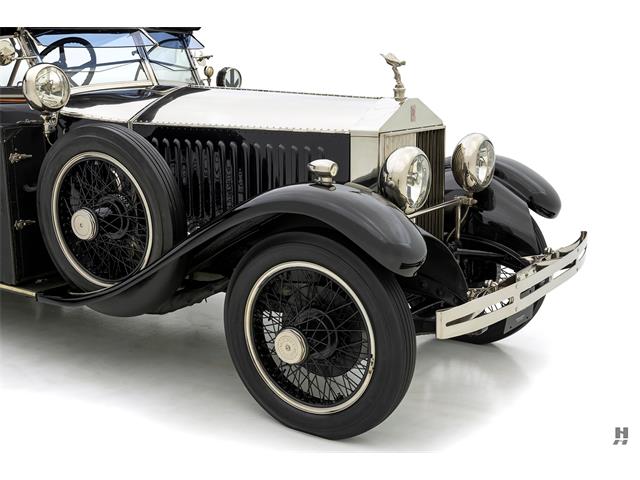
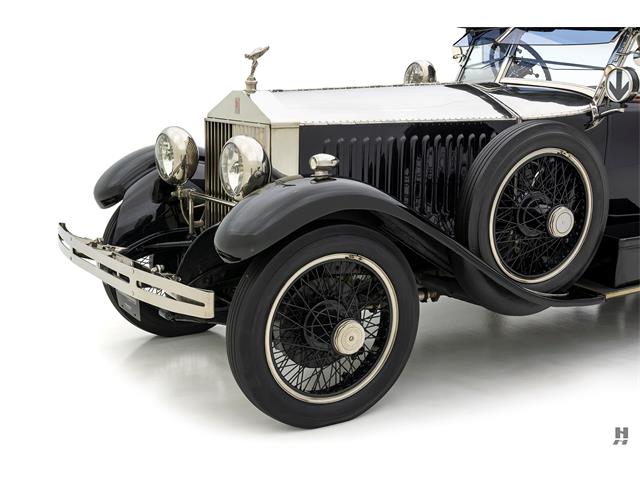
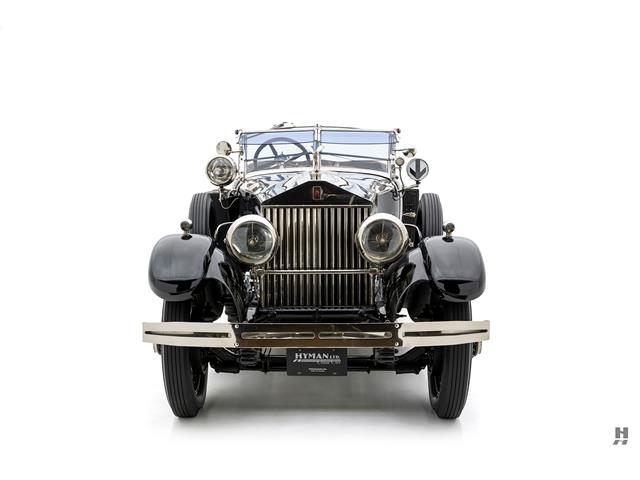
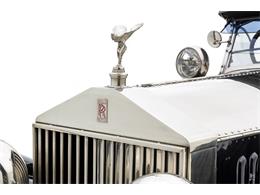
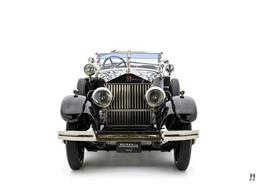
wings, and gracefully curved body sides. Beautifully finished in
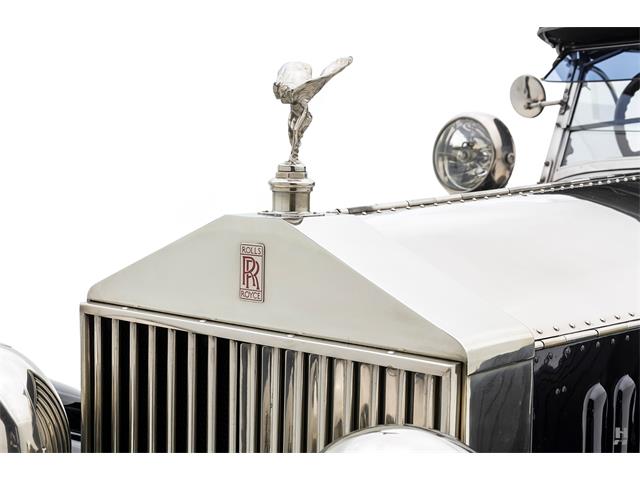
deep blue with black wings, the tops of the bonnet and scuttle are
left in bare polished alloy with striking effect. Mr. Van Zeller
specified only the finest fitments including Stephen Grebel
headlamps, a Grebel spot lamp, and French-made Lucifer side lamps.
Opposite the spot lamp is a fabulous accessory turn signal -
drum-shaped and illuminated with a black arrow to indicate
direction of travel. Also notable are the distinctive vee-shaped
four-panel windscreen with blue-tinted visors, and curved side
class.
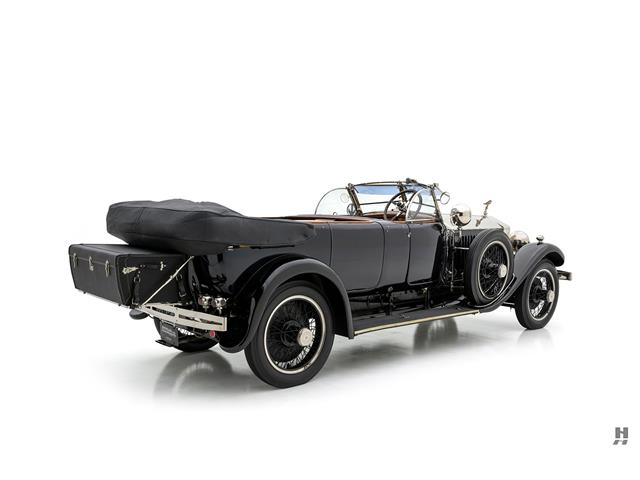
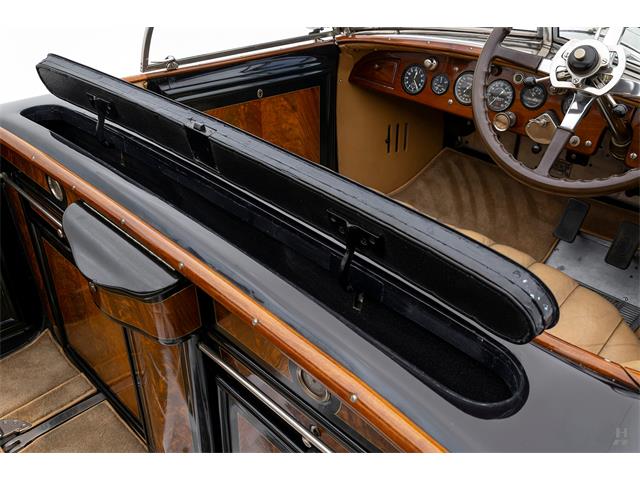
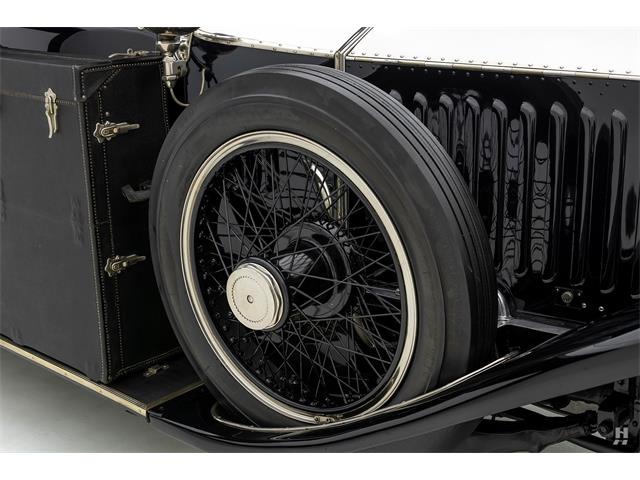
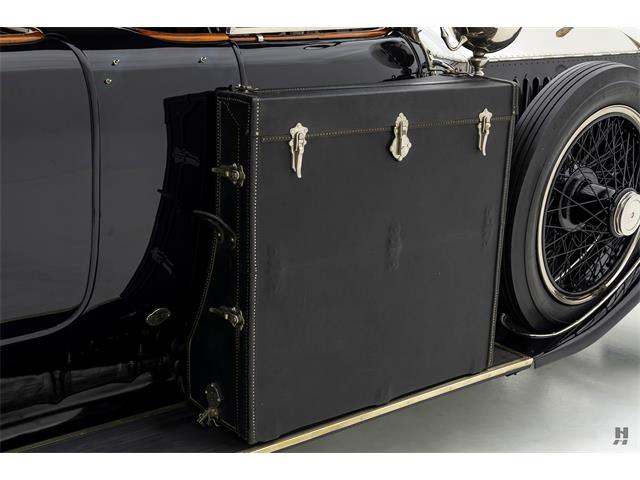
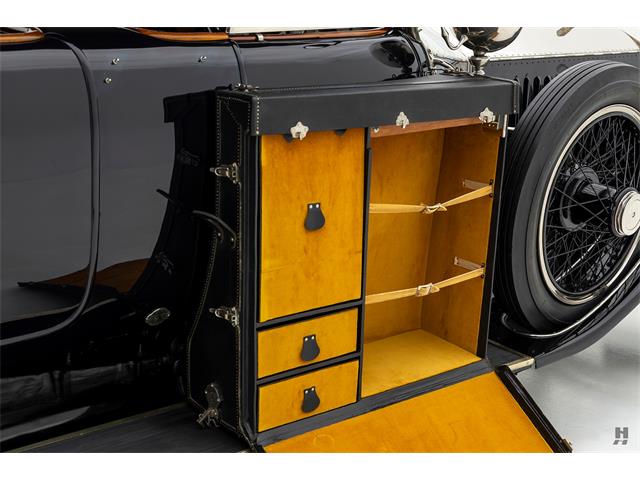
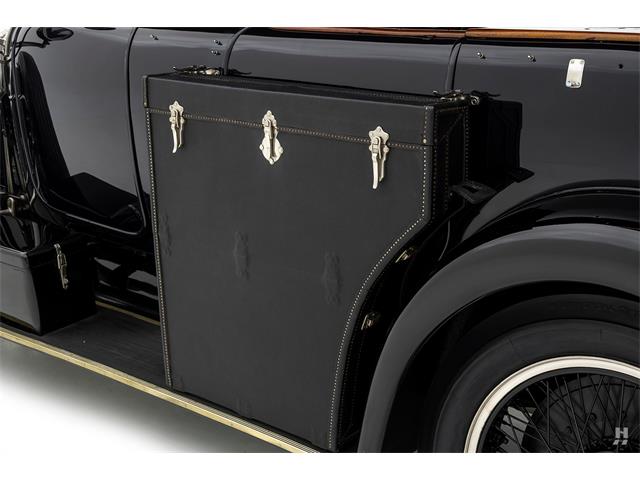
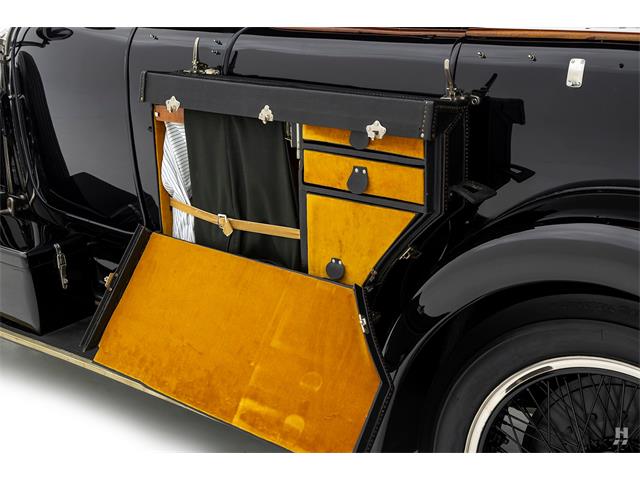
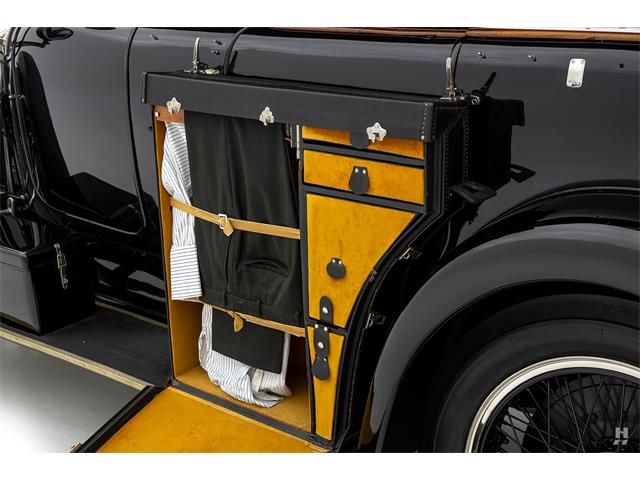
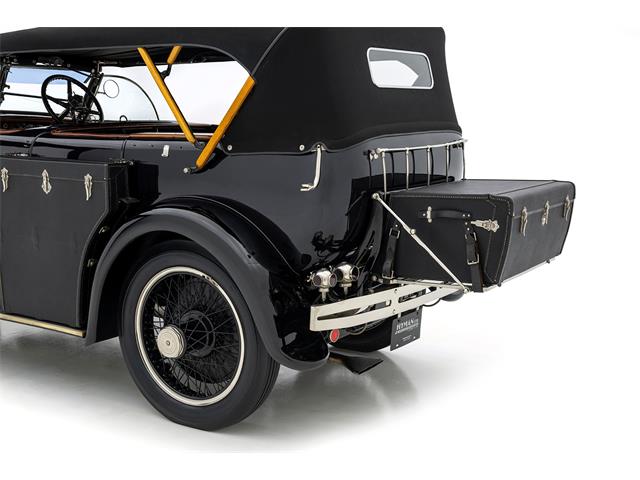
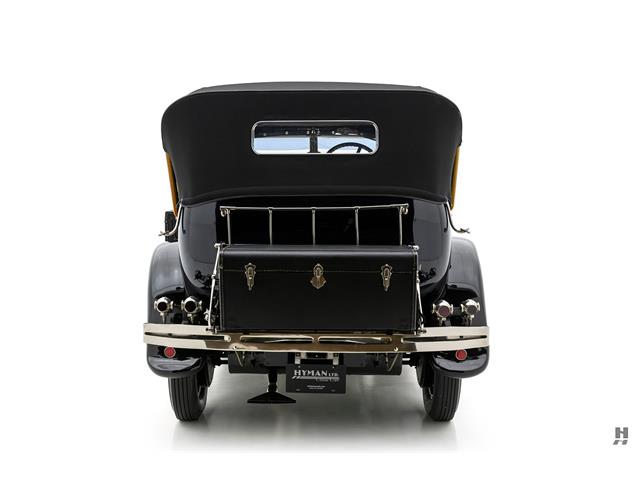
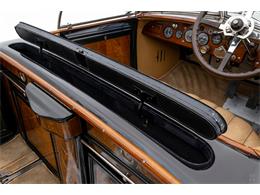
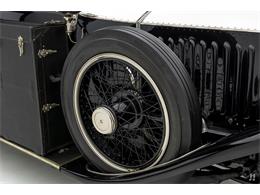
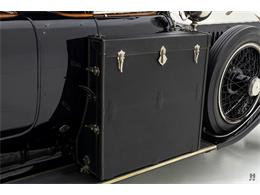
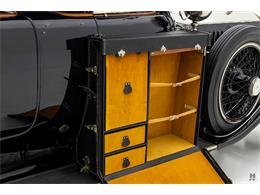
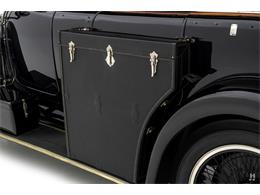
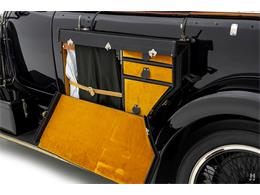
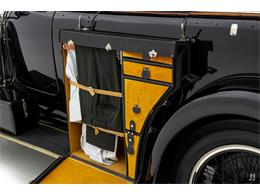
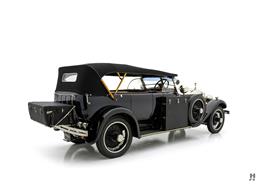
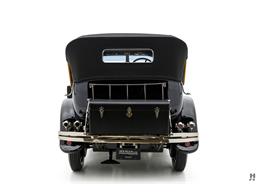
Elaborate accessories by Van den Plas master craftsmen include
gorgeous leather-covered, exterior-mounted wardrobe cases,
beautifully built to match the curvature of the body. Made to hold
hanging garments, the cases also feature built-in drawers for
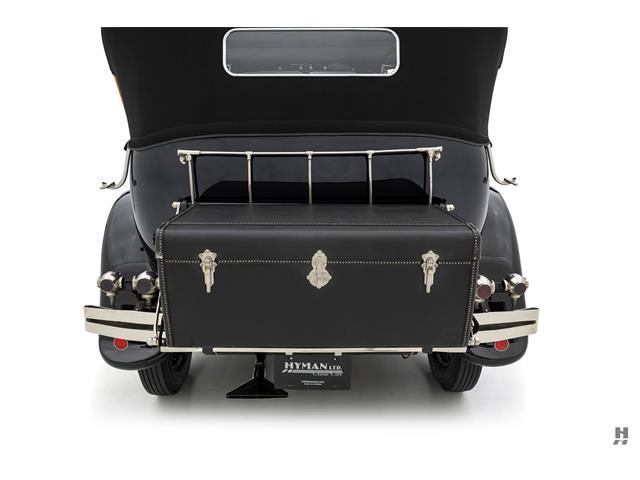
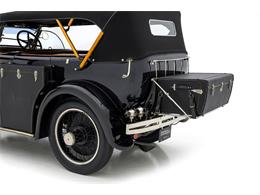
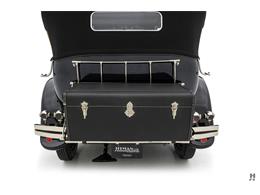
smaller items. At the rear sits a well-proportioned trunk on a
folding rack.
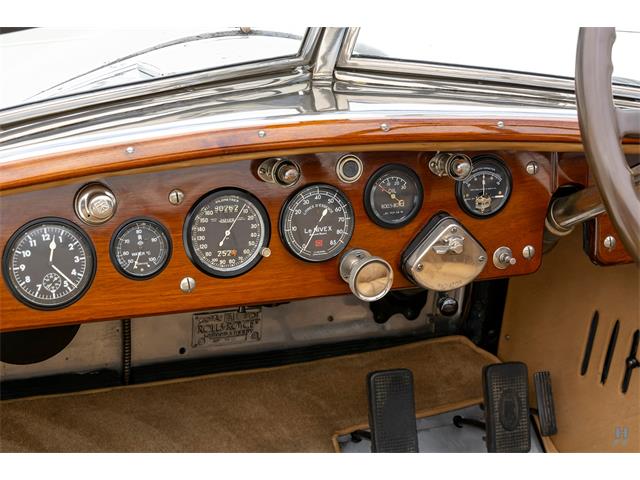
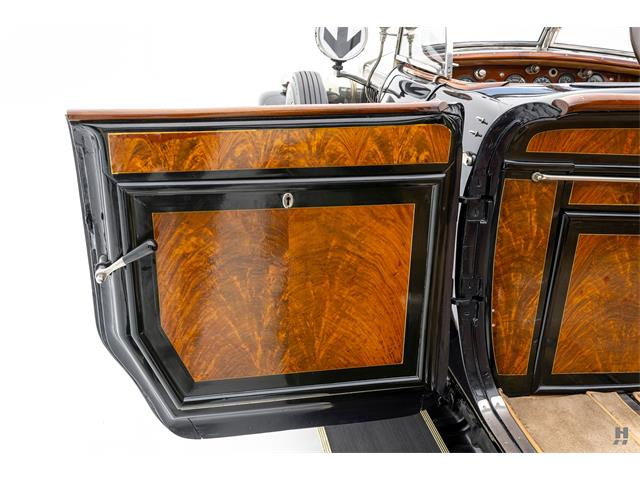
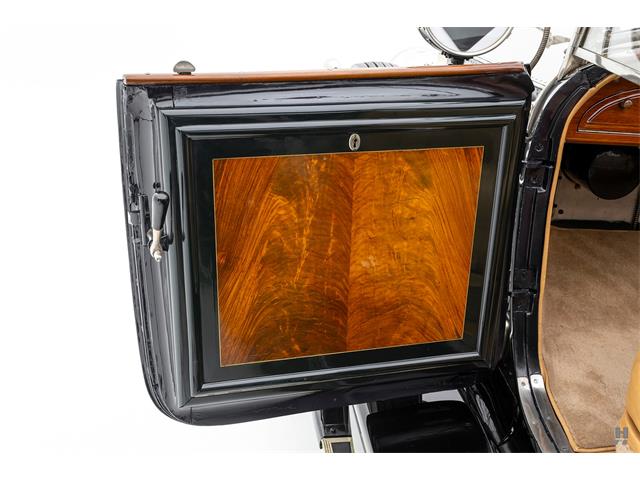
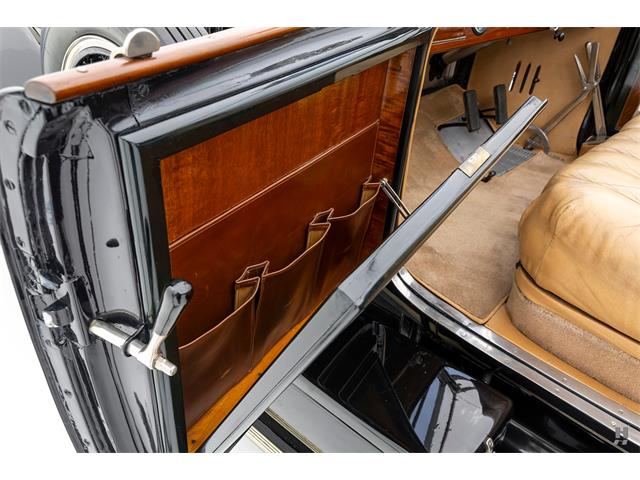
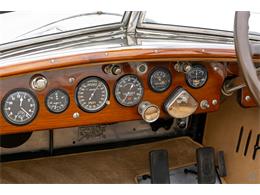
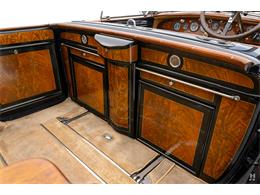
The incredible craftsmanship and attention to detail carries over
to the passenger compartment, as occupants enjoy nearly every
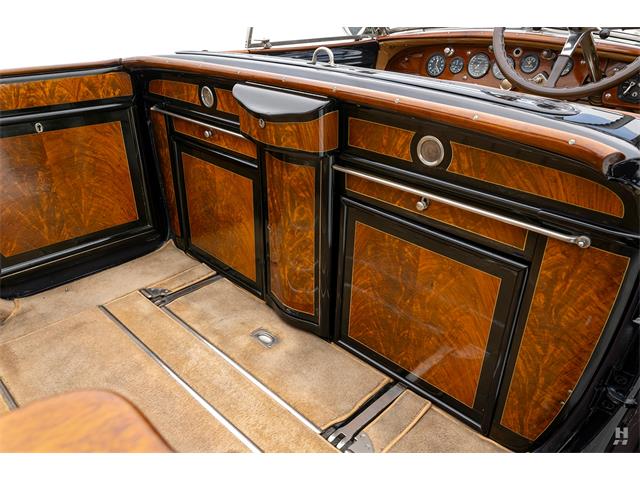
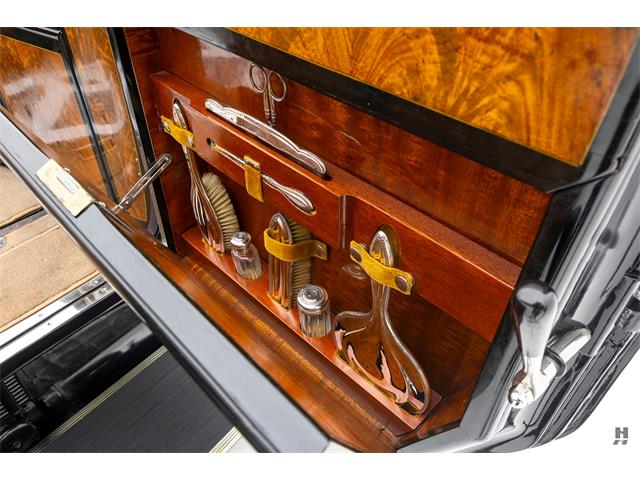
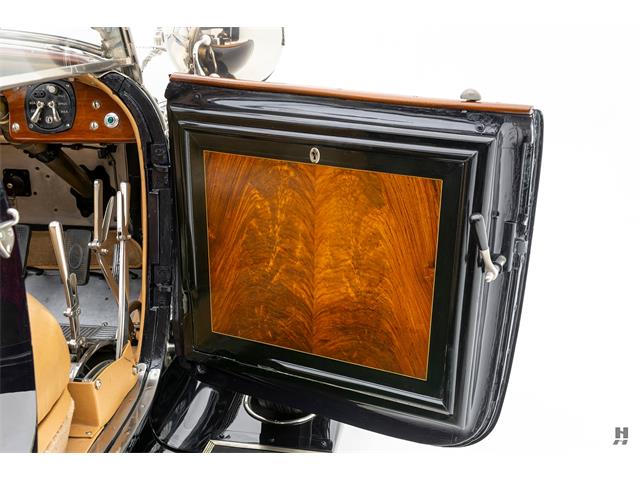
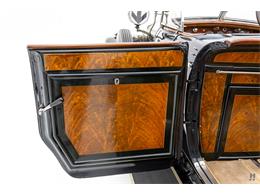
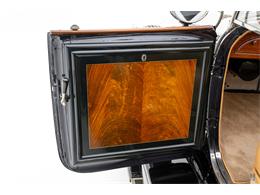
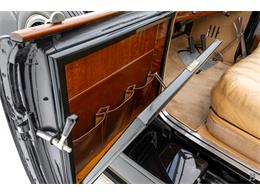
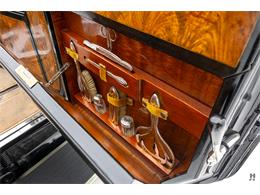
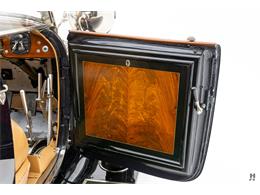
conceivable luxury readily at hand. The rear door panels, with
matched walnut cabinetry, house sterling silver grooming tools,
pomade jars, perfume bottles, hand mirror, and leather glove boxes.
Van den Plas artisans put their skills to the test, building an
exquisite, curved cabinet on the division panel to house cocktail
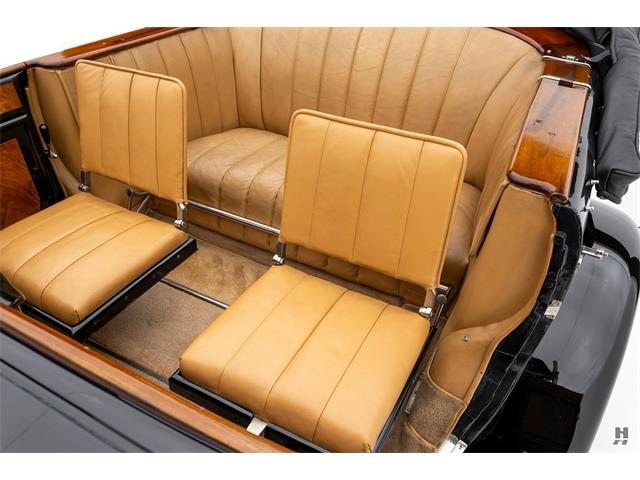
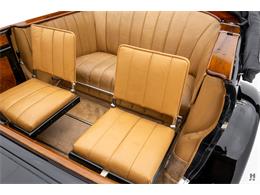
service items including crystal decanters and glasses. Disappearing
opera seats are artfully concealed behind matching wood panels, and
a fold-out windscreen for rear passengers mimics the rake and shape
of the front. Tan leather upholstery and a full folding top with
its signature rakish Phaeton lines round out the amazing
aesthetic.
Documentation provided by the Rolls-Royce Foundation follows the
history of 98LC through several highly regarded Rolls-Royce
collectors. A 1985 Directory and Schoellkopf card shows it was in
the care of James Leake Sr. of Muskogee, Oklahoma. Leake's name is
well known to collectors, through his eponymous auction house. He
also amassed one of the largest collections of Rolls-Royce cars in
the US - with over 40 chassis numbers documented by the RROC. By
1999, it was in the care of another famous marque enthusiast, Mr.
Lawrence Smith of Wichita, Kansas. Smith kept the car in his
extensive collection until 2007, when the most recent owners
acquired it.
As offered, 98LC benefits from expert, attentive care in the hands
of its current stewards, who have enjoyed it with great enthusiasm
on tours, showed it with pride at concours events, and shared it
with the public at the Gilmore Car Museum in Hickory Corners,
Michigan.
A motorcar of such stature is deserving of the finest restoration,
and 98LC has indeed been restored with great reverence to its
original grandeur. Paint quality and wood finishing are
superlative, and while the restoration is older, the car has been
meticulously maintained by passionate and experienced collectors.
It is widely eligible for Classic Car Club of America CARavan�
tours, Rolls-Royce owner's club events, and any number of
prestigious concours d'elegance around the world, where it will
undoubtedly garner much admiration. Arguably among the most
extraordinary Phantom I chassis extant, 98LC is the grandest of
traditional European Grand Tourers.
ClassicCars.com has been recognized as one of the fastest-growing private companies in the United States, successfully making the Inc. 5000 list in both 2015,
2016, 2017 and 2018. This prestigious accolade represents the continued growth of the company, and ClassicCars.com's dominance as the world's largest online marketplace for
buying and selling classic and collector vehicles.
The Stevie Awards, the world's premier business awards recognized
ClassicCars.com's first-class Customer Support team with a Stevie Bronze Award in 2019, celebrating the team's skills as exemplary customer support specialists.
In 2016 The Journal, brought to you by ClassicCars.com, was celebrated as the SECOND MOST INFLUENTIAL automotive blog in the world by NFC Performance.