This vehicle has been soldThis vehicle is no longer available for sale on ClassicCars.com. Please set an alert if you would like to be notified as soon as similar vehicles become available.
For Sale: 1938 Bugatti Type 57C in Astoria, New York
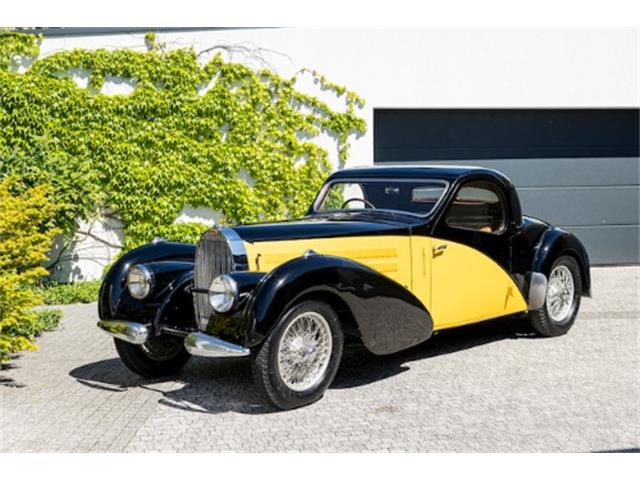
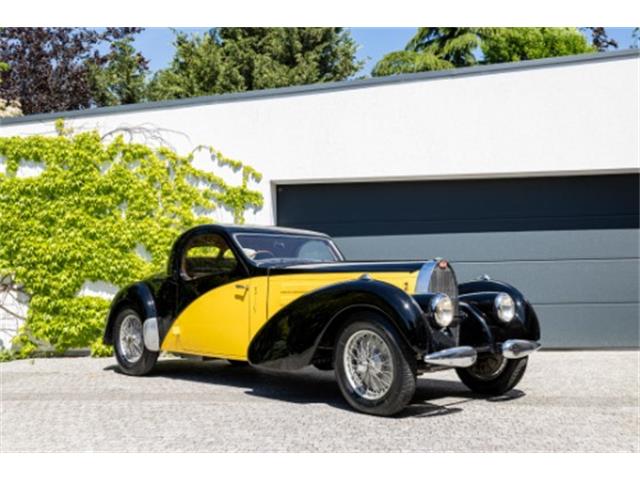
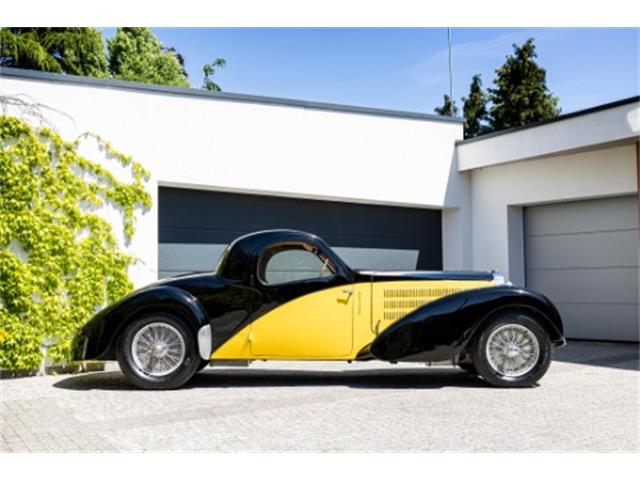
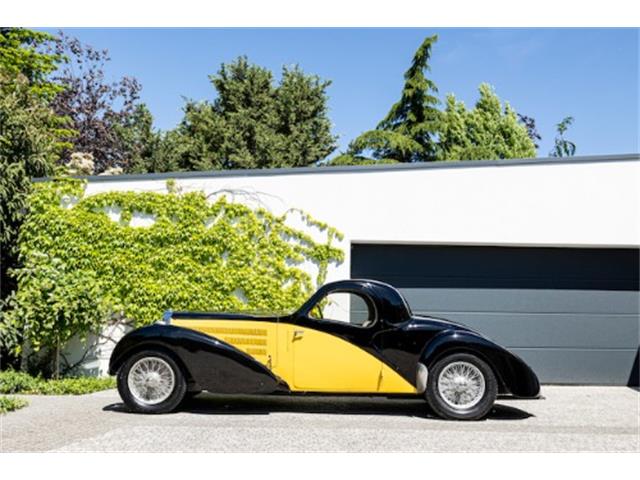
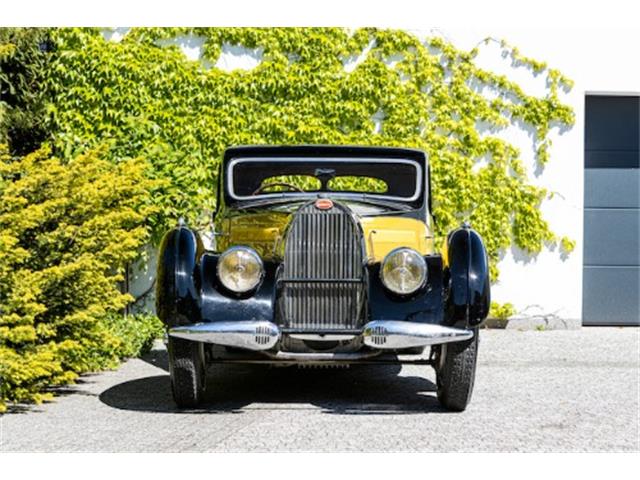
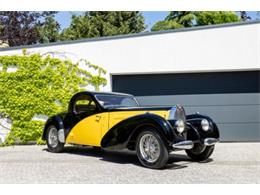
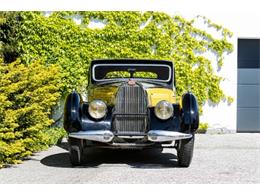
Stunningly Original 1938 Bugatti Type 57C Atalante: 1 of 3
Supercharged Atalante Examples with Aluminum Bodywork. Matching
Numbers and with Outstanding Provenance In the years of its
existence, Bugatti built many road and race cars that are special.
But not many Bugatti road cars are quite as special as chassis
57767, as it is one of only three Atalante that were built to its
precise specification, an ultimate specification that makes it one
of the fastest and most desirable of its kind. From April 1935 to
December 1938, a grand total of only 33 Type 57 chassis were fitted
with the breathtaking Atalante coachwork, designed in-house at
Bugatti by Joseph Walter under the close direction of Jean
Bugatti.Chassis 57767 is the 31st of these rare chassis, and the
number 31 is written on the inside of the hood, engraved on the
woodwork on the trunk, and written in chalk on the back side of the
dashboard woodwork. However, of the 33 Atalante-bodied chassis,
only 16 received an aluminum body. In addition, of the 33, only 5
were factory supercharged. To cap it all, only three Atalante
chassis were fitted both with the aluminum body and the
supercharger by the factory, thereby making these few extraordinary
cars the lightest and fastest of them all. This is a truly special
and exceptionally rare combination which makes 57767 one of the
most coveted Bugatti T57C in the world.On September 6 and 7, 1938,
a certain Mr. Albert Cahen of 13 rue Joans in Paris, ordered two
Bugattis at the Bugatti Magasin d'Exposition at no. 116
Champs-lyses: a coach Ventoux, chassis no. 57671, and a 57C
Atalante which was to be chassis 57767. One must assume that with
its four seats and practical body, the Ventoux would be Mr. Cahen's
daily driver, while the supercharged Atalante would be used for
long high-speed trips or exciting forays into the
countryside.Correspondence with the factory dated September 9, 1938
reveals that Mr. Cahen acquired the very last Atalante body (no.
31) that would ever be available from the factory, as bodies nos.
32 (chassis 57733) and 33 (chassis 57788) were already spoken for.
Albert Cahen's 57C was finally finished on December 7 and driven
from Molsheim to the Bugatti Magasin de Vente at no. 46 rue
Montaigne in Paris on December 8, 1938. The driver was none other
than M. Touissant, Ettore Bugatti's private chauffeur and operator
of Le Patron's daily driver, the world-famous Type 41 La Royale
Coup Napolon, chassis 41100, which resides in the Schlumpf
Collection in Mulhouse, France.Albert Cahen received his lovely new
supercharged Atalante on December 10, finished in royal blue with
Havana leather, priced at a massive 116,160 francs, which would
have bought four complete Citron Traction Avant, with enough change
left over for a nice extended holiday on the Cte d'Azur. But Mr.
Cahen could well afford his new and expensive toy: he was the
proprietor of a profitable coffee roasting business that marketed
coffee products through a chain of stores across France under the
name of Caffa.Chassis 57767 was then registered 1916-RM1. This
number had appeared on a T57 Atalante that was shown on the Bugatti
stand at the October 1938 Paris Salon. Pierre-Yves Laugier does not
rule out that that car could have been 57767, perhaps not entirely
finished, as Cahen had placed his order in the beginning of
September and did not receive his car until December of 1938.A
letter from Automobiles Bugatti to Albert Cahen dated August 30,
1939, verifies that chassis 57767 was undergoing repairs due to a
camshaft lubrication problem in the Bugatti shops in rue Carnot in
the Parisian suburb Levallois-Perret. Little did he know it, but
Cahen's days with 57767 were almost over. Hitler invaded Poland two
days later on September 1, 1939, and the car was squirreled
away.Pierre-Yves Laugier assumes that the car was stored by Bugatti
for the duration of the war, likely in the Levallois-Perret
premises. At the Paris Salon in October 1948, Bugatti had a small
stand and showed an all-black T57 Atalante for sale by the factory,
wearing license plate 1916-RM1. It can be assumed that the car in
question was chassis 57767, which means that the car was shown at
least once at the Paris Salon, and remarkably, perhaps twice.The
record of ownership in the 1949 to 1952 period remains unknown as
the Paris registration archives relating to those years have been
destroyed. On September 11, 1952, chassis 57767 was re-registered
with the plate 2358-BM75. Its new proprietor was Mr. Bernard
Greyfie de Bellecombe, residing at no 7, rue Beethoven in Paris. On
June 3, 1953, the car was sold to Roger Berthet of no. 84 rue
Lafontaine, also in Paris. Soon after, on October 27 of that year,
it went to Christian Prevost-Marcilhacy, a 22-year-old student of
no. 27 rue du Gnral Foy in the 8th arrondissement who already owned
two Type 40 and had purchased the very first Type 55, chassis
55201, only the week before. Prevost was drafted in November 1953
and put 57767 up for sale with Francis Mortarini, an early
specialist in great cars from the 1930s, who ran a garage in
Neuilly-sur-Seine, a suburb of Paris.In August 1954, Mortarini sold
the car to Jean Piger, who lived at his Chteau de Margeaix close to
Beaulieu in the Haute-Loire in the center of France. He registered
the car 999-X43 and would keep it for the next sixty years. Piger
worked for Schlumberger, a large French energy firm, and used the
car extensively for many years. He later stored it in a heated barn
on his property, along with a Mercedes 300SL and a Jaguar E-type
both of which he had purchased new. During his tenure, the engine
was attended to by a company named Hauswald in Paris, where the
block was replaced at one point due to water circulation issues.In
2014, Jean Piger put the car up for sale. By this time, he had
become a recluse, and it was an unusual condition of the sale that
no buyer could inspect the car before purchase. Henri Chambon, a
businessman in the South of France, acquired the car. He had never
seen it, but a person who had inspected it years previously,
advised him to proceed. The Sleeping Beauty that 57767 had now
become was then extracted from its barn where it had not moved a
wheel for many years. It was sent to the French Bugatti specialist
Ets. Randoni to be sympathetically brought back to life with
instructions not to touch the car's originality, but simply to
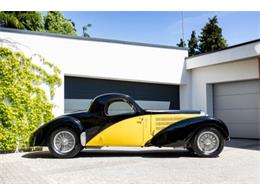
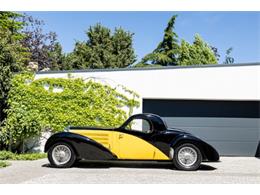
recommission the mechanicals, clean, and preserve.At some point,
Piger had the sides of the car painted in yellow in the traditional
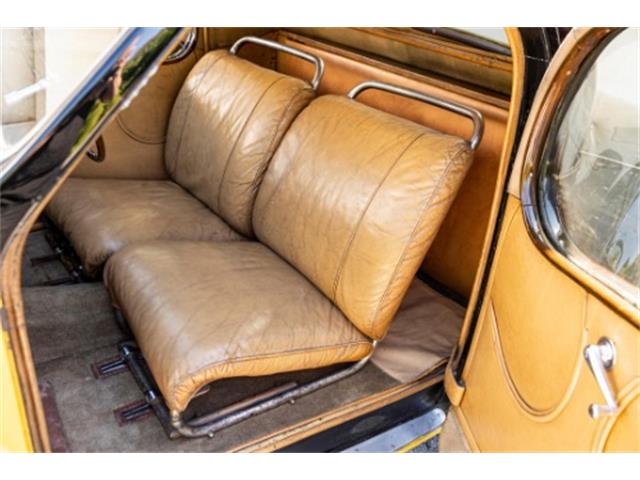
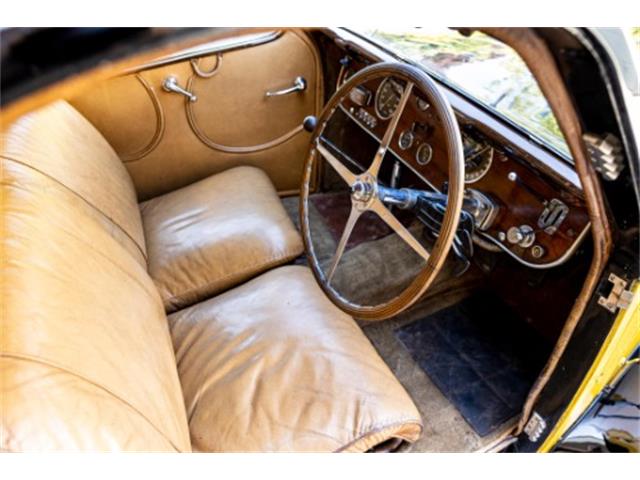
Atalante style. The black paint appears to be original from the
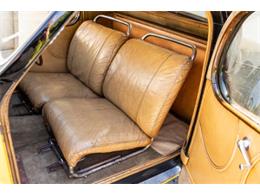
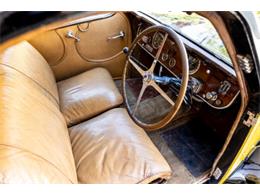
late forties. The interior is original, including the dash and
leather on the seats. Screen rubbers and wing seals are either
original or were replaced in the late forties. To call something
unrepeatable is a hackneyed phrase, but it is safe to say that this
car is unique in terms of its deep provenance, history, and
authenticity. Not only was chassis 57767 built to the rarest of
Atalante specifications. In addition, of the surviving Atalantes,
no other car has retained its originality to such a degree, nor
been owned by the same person for sixty years. It will stand out in
any collection and be welcome at any of the world's foremost
concours events. 1938 Bugatti Type 57C AtalanteDesign by Jean
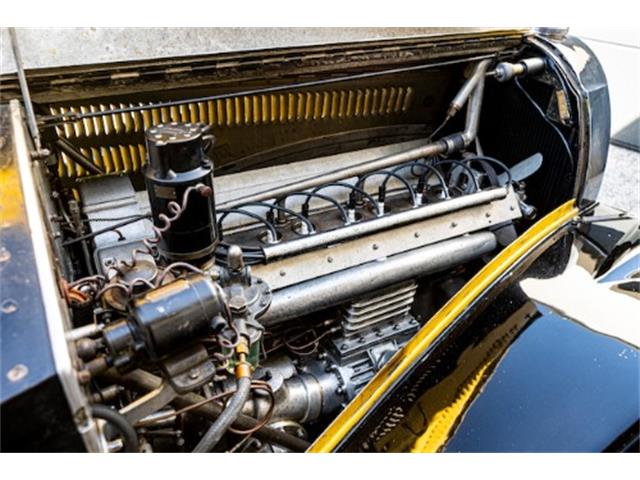
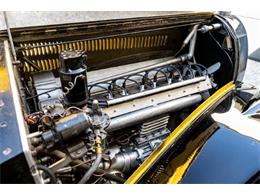
BugattiChassis no. 57767Engine no. 62CBody No. 31 3,257cc DOHC
All-Alloy 8-Cylinder EngineRoots-type SuperchargerStromberg
Twin-choke Carburetor160bhp at 5,500rpm4-Speed Manual
Transmission4-Wheel Leaf Spring Suspension4-Wheel Hydraulic
Lockheed Drum Brakes Rare and desirable, factory supercharged
example of Jean Bugatti's Atalante masterpiece One of just 3
factory supercharged Atalante examples made with aluminum bodywork
Outstanding provenance, including Paris Salon exhibition and
60...for more information please contact the seller.
ClassicCars.com has been recognized as one of the fastest-growing private companies in the United States, successfully making the Inc. 5000 list in both 2015,
2016, 2017 and 2018. This prestigious accolade represents the continued growth of the company, and ClassicCars.com's dominance as the world's largest online marketplace for
buying and selling classic and collector vehicles.
The Stevie Awards, the world's premier business awards recognized
ClassicCars.com's first-class Customer Support team with a Stevie Bronze Award in 2019, celebrating the team's skills as exemplary customer support specialists.
In 2016 The Journal, brought to you by ClassicCars.com, was celebrated as the SECOND MOST INFLUENTIAL automotive blog in the world by NFC Performance.